

Understanding refractive errors
A refractive error happens when the eye does not focus light precisely on the retina, producing blurry vision. This is not an eye disease — it's an optical issue that can almost always be corrected with glasses, contact lenses, or in some cases refractive surgery.
A complete refractive evaluation goes beyond just numbers on a prescription. Dr. Roxanna Gangi assesses how your eyes work together, how comfortable your current correction is, and whether other factors — such as dry eye or focusing fatigue — are contributing to blurry or tired vision.
Common signs of an uncorrected refractive error
You may benefit from a refractive evaluation if you experience any of the following:
- Blurry distance vision (signs at school, road signs, TV)
- Blurry near vision (reading, phone, paperwork)
- Squinting or holding things closer to see clearly
- Headaches after reading or screen use
- Eye strain or fatigue at the end of the day
- Difficulty seeing while driving at night
- Older glasses or contacts no longer feeling sharp
What a refractive evaluation includes
Your refractive exam combines automated measurements with a careful manual refraction, where Dr. Roxanna Gangi fine-tunes the prescription based on your real-world feedback. The result is a prescription that is not just mathematically correct, but genuinely comfortable.
If you are interested in contact lenses, a separate contact lens fitting evaluates corneal shape, tear film, and lifestyle needs to recommend the best material and modality. For children with progressing nearsightedness, myopia control options are discussed.
Myopia (nearsightedness)
Myopia makes distant objects look blurry while near vision stays clear. It is increasingly common in children and young adults, often related to genetics and high amounts of close-up work.
Treatment includes glasses, contact lenses, or refractive surgery for adults. For children, modern myopia control options can slow progression and lower the long-term risk of high myopia.
Hyperopia (farsightedness)
Hyperopia makes near vision blurry and can also affect distance vision in higher prescriptions. Many young patients with mild hyperopia compensate without realizing it, which can lead to eye strain, focusing fatigue, and headaches.
Glasses or contact lenses correct hyperopia comfortably and reduce the strain on the focusing system.
Astigmatism
Astigmatism happens when the cornea or lens is shaped slightly more like a football than a sphere, causing light to focus at multiple points instead of one. Vision is blurry or distorted at all distances.
Astigmatism is corrected with glasses, toric soft contact lenses, or rigid gas-permeable lenses. In some cases, it is also a candidate for refractive surgery.
Presbyopia
Presbyopia is the natural age-related loss of near focusing ability that affects almost everyone over 40. Solutions include reading glasses, progressive lenses, multifocal contact lenses, and other options discussed on our Presbyopia Solutions page.
Glasses
Modern lens technology makes glasses sharper, lighter, and more glare-resistant than ever. Options include single vision, progressives, occupational lenses for digital work, blue-light filters, and high-index materials for stronger prescriptions.
Contact lenses
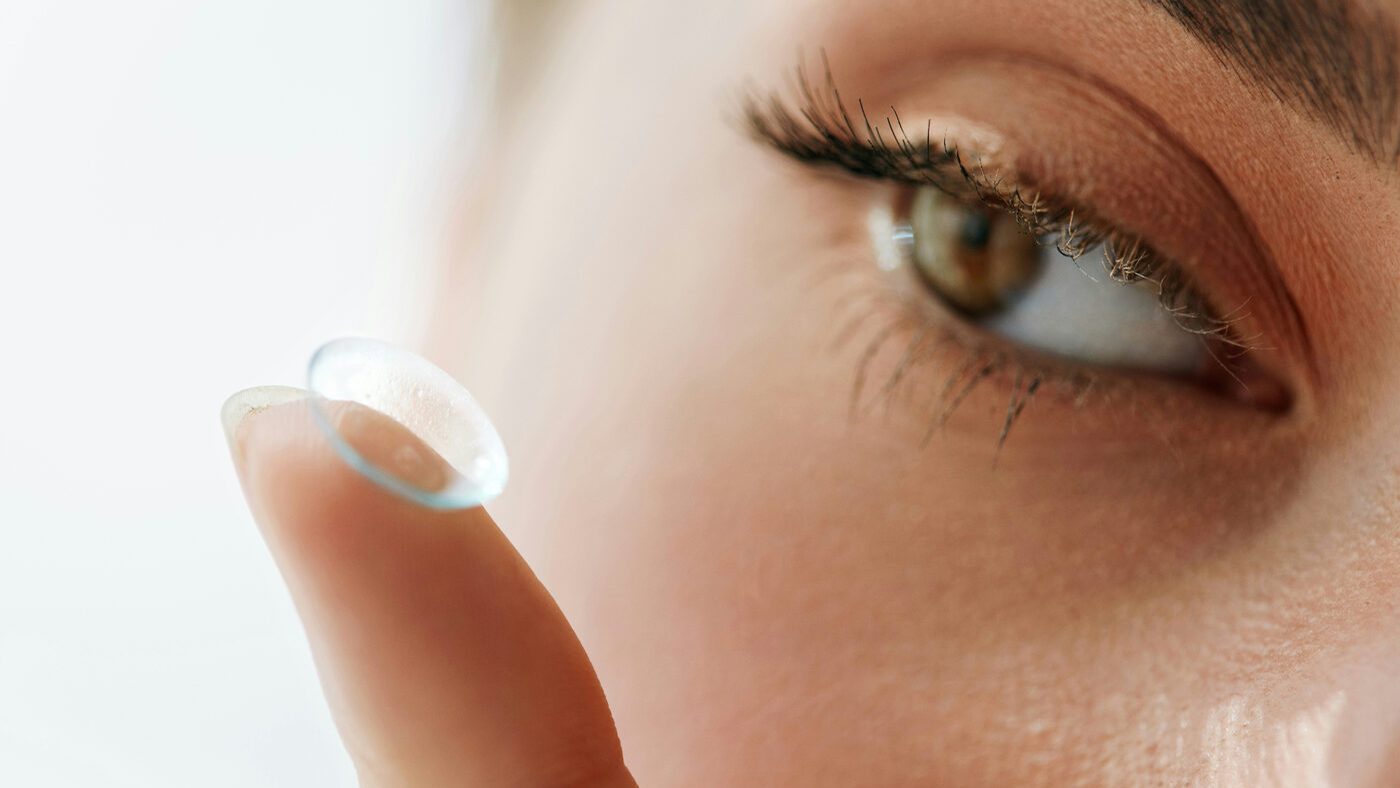
Contact lenses are an excellent option for patients who want freedom from glasses for some or all activities. A proper contact lens fitting ensures the lens is healthy for your eye and comfortable throughout your day.
Myopia control for children
Myopia control aims to slow how quickly a child's nearsightedness gets worse. Evidence-based options include specialty soft contact lenses, low-dose atropine drops, and certain spectacle lens designs. The goal is to reduce the long-term risk of high myopia and the eye health issues associated with it.
Why patients choose Dr. Roxanna Gangi for refractive care
Dr. Roxanna Gangi serves patients across York Region — including Aurora, Newmarket, Richmond Hill, Thornhill, and Vaughan — with personalized, in-person optometry care from Dr. Roxanna Gangi.
Dr. Roxanna Gangi is known for refractions that feel natural — not just numbers on a chart. With careful technique and a focus on real-world comfort, your prescription matches how you actually use your eyes.
Related services
Frequently asked questions
How often should my prescription be checked?
Most adults benefit from a refraction every one to two years. Children, contact lens wearers, and patients whose prescription is changing should be seen yearly.
Can two different prescriptions both be 'right'?
Sometimes, yes. Refraction has a small range of acceptable outcomes. Dr. Roxanna Gangi fine-tunes the prescription to your real-world feedback, which can feel quite different from one office to another.
Are eye exams and contact lens fittings the same thing?
No. A contact lens fitting is a separate evaluation that includes corneal measurements, lens trial, and follow-up. It is added on to the comprehensive exam when needed.
Can my child's nearsightedness be slowed down?
Yes. Modern myopia control strategies — including specialty contact lenses, atropine drops, and certain spectacle designs — can meaningfully slow progression. Options are personalized to each child.
Is refractive surgery right for me?
It depends on your prescription, corneal health, age, and lifestyle. We provide consultations and co-management for LASIK and PRK and refer to trusted surgeons when appropriate.
Will my insurance cover my new glasses?
Many private benefit plans cover part of glasses or contact lenses. We provide detailed receipts you can submit to your insurer.