Color Blindness Is More Common Than Most People Think
Written or medically reviewed by Dr. Roxanna Gangi, Optometrist
A surprising number of people go through life without realizing they don't see colors the same way others do.
For some, it starts with small moments. Mixing up green and brown clothing. Struggling to read color-coded charts at school or work. Wondering why certain shades that look completely different to other people seem almost identical to them.
Color blindness, also known as color vision deficiency, affects millions of people worldwide and is significantly more common in men than in women.
Current research shows that roughly 8% of men and 0.5% of women have some form of inherited color blindness. In simpler terms, that means about 1 in every 12 men and 1 in every 200 women are affected.
Dr. Roxanna Gangi often reminds patients that color vision problems can quietly go unnoticed for years, especially when someone has adapted to seeing the world a certain way since childhood.
Why Men Are More Likely to Be Color Blind
The reason is genetics.
The most common form of color blindness is linked to the X chromosome. Men have one X chromosome, while women have two. If a male inherits a color vision deficiency gene, there usually isn't a second healthy copy to compensate for it.
Women can still carry the gene, but they are much less likely to actually develop noticeable color blindness themselves. That's why inherited red green color blindness is dramatically more common in males.
Interestingly, many patients first discover a possible issue during a routine comprehensive eye exam rather than because of any obvious symptom.
The Most Common Types of Color Blindness
Red Green Color Deficiency
This is by far the most common type. Reds, greens, browns, and oranges may appear unusually similar. Many people with this condition learn to rely on brightness, position, or context instead of color itself.
Blue Yellow Color Deficiency
This form is less common and affects the ability to distinguish between certain blue and yellow tones.
Complete Color Blindness
True monochromatic vision, where very little color is seen at all, is extremely rare.
Signs You May Have Color Vision Deficiency
Color blindness isn't always obvious. In fact, many children assume everyone sees colors exactly the same way they do.
Some common signs include:
- Difficulty separating certain colors
- Problems reading color-coded graphs or maps
- Trouble matching clothing
- Confusing traffic light colors
- Difficulty with school activities involving color
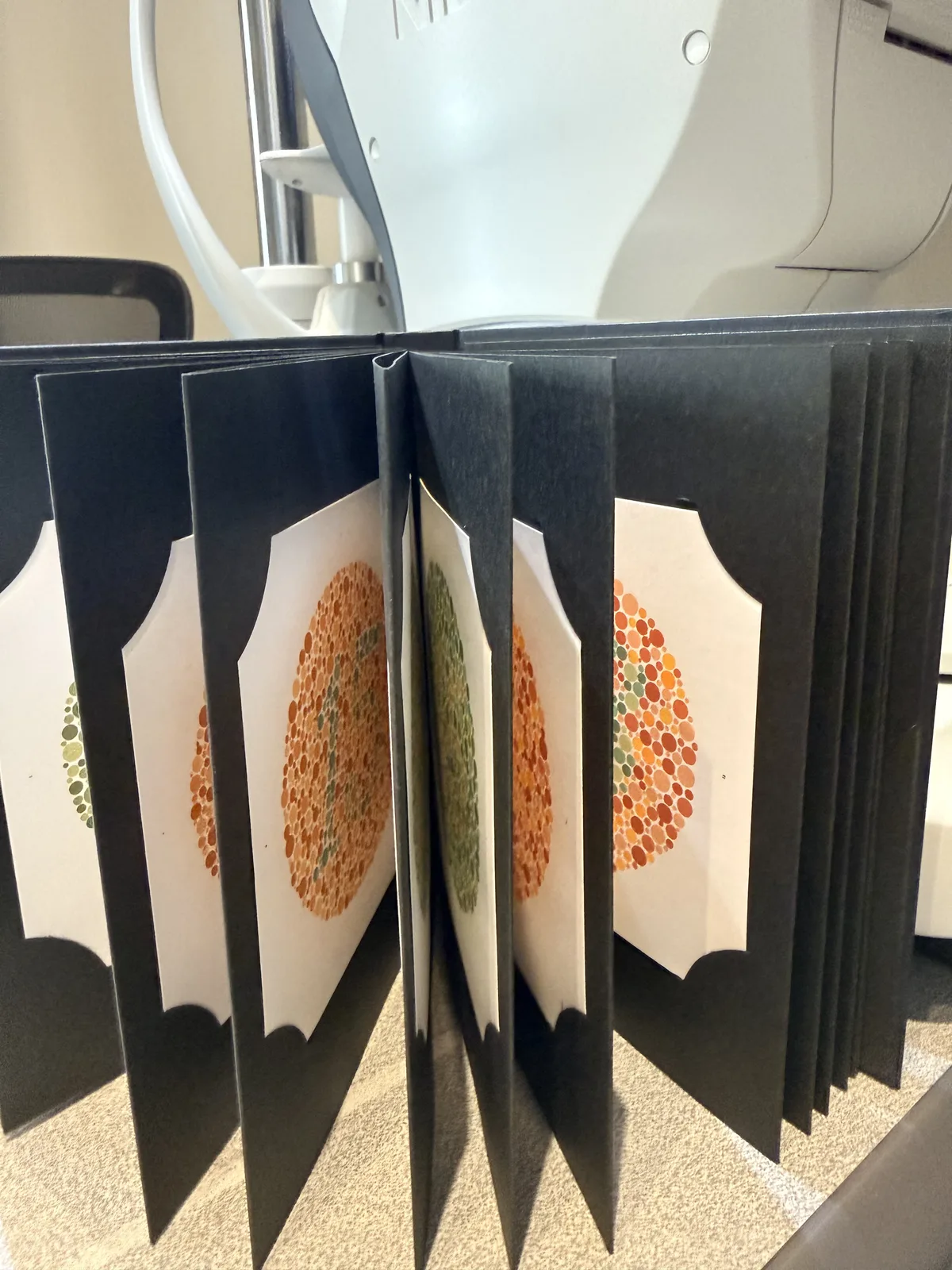
Because these symptoms can be subtle, online screening tools are often the first step people take when they become curious about their vision. Our online color vision test is designed as an educational screening tool that may help identify a possible deficiency before scheduling a full eye examination.
Color Blindness and Everyday Life
For many people, color blindness is only a minor inconvenience. But in some careers and situations, accurate color perception matters more than people realize.
Pilots, electricians, designers, technicians, healthcare workers, and drivers may all rely heavily on color recognition in daily tasks.
That's one reason regular eye care matters even when vision seems "fine." During a professional eye exam, optometrists aren't only checking how clearly you see — they're also evaluating overall eye health, focusing ability, retinal health, and visual function.
Patients dealing with headaches, blurry vision, or screen fatigue from long hours on digital devices often discover that their symptoms are connected to broader visual issues.
Adults over 40 may also notice additional vision shifts that are unrelated to color blindness itself but worth understanding.
Can Color Blindness Develop Later in Life?
While most color blindness is inherited, changes in color perception can also appear later due to eye or general health conditions.
Possible causes include:
- Cataracts
- Diabetes-related eye disease
- Optic nerve conditions
- Certain medications
- Retinal disease
- Age-related eye changes
This is why routine eye disease screening remains important even for adults who have never had vision problems before. Subtle shifts in how you perceive color can sometimes be an early clue that something else is going on inside the eye.
Understanding Your Vision Better
There is currently no permanent cure for inherited color blindness, but understanding how your eyes perceive color can still make a meaningful difference in daily life.
For many patients, simply identifying the issue explains years of confusion with colors, screens, school materials, maps, or lighting conditions. It can also guide practical adjustments — from labeling systems at work to choosing better lighting at home.
If you'd like to learn more about Dr. Roxanna Gangi's patient-focused approach to modern eye care across York Region, our about page is a good place to start.
Disclaimer: This article is intended for educational purposes only and does not replace professional medical advice, diagnosis, or treatment. Online color vision tests are screening tools only and are not a substitute for a comprehensive eye examination.
Ready to book your eye exam?
Book an appointment with Dr. Roxanna Gangi today at the Toronto and York Region location most convenient for you.
Book an Appointment