The 20 20 20 Rule: Ending Digital Eye Strain in the Remote Work Era
Written or medically reviewed by Dr. Roxanna Gangi, Optometrist
Remote work has changed the way our eyes spend the day.
Before, your eyes had natural breaks. You walked to a meeting. You looked across the room. You drove somewhere. You spoke to someone face to face.
Now, many people move from laptop to phone to tablet to television, almost without noticing. Then by late afternoon, their eyes feel dry, heavy, blurry, or tired.
That is digital eye strain, also called computer vision syndrome. It is not imaginary, and it is not just “too much screen time.” It happens because your eyes are being asked to focus up close for long periods without enough rest.
The good news is that one simple habit can make a real difference: the 20 20 20 rule.
What is the 20 20 20 rule?
The rule is easy to remember.
Every 20 minutes, look at something about 20 feet away for 20 seconds.
That is all.
It sounds almost too simple, but there is a reason it helps. When you stare at a screen, your eyes stay locked in near focus. The focusing muscles inside the eyes keep working quietly in the background.
Think of it like holding a light weight in your hand. At first, it feels like nothing. After an hour, your muscles start to complain.
Your eyes can feel the same way.
Looking into the distance gives that focusing system a short reset. It does not replace an eye exam, but it can reduce the strain that builds up during long screen sessions.
Why screens make your eyes feel tired
Screens force your eyes to do a lot of small, repetitive work.
You are reading tiny text, switching between tabs, dealing with glare, adjusting to brightness, checking notifications, and focusing at the same distance for hours.
That is why screen fatigue does not always mean your prescription is wrong.
Sometimes your eyes are simply overworked.
Dr. Roxanna Gangi often sees patients who say their vision feels fine in the morning, but blurry or uncomfortable later in the day. That pattern can happen with digital eye strain, dry eye, focusing issues, or an outdated prescription.
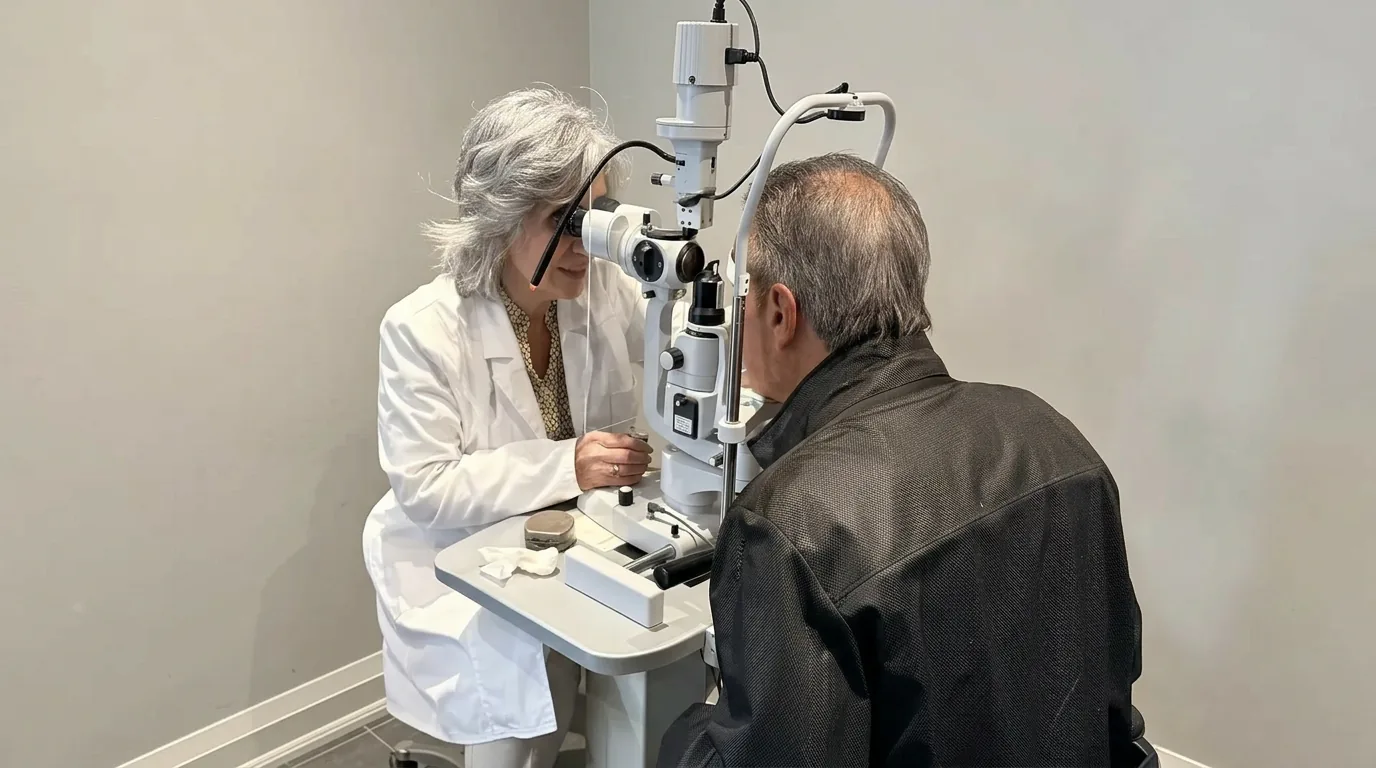
A comprehensive eye exam helps identify what is actually causing the problem instead of guessing.
The blink problem nobody thinks about
One of the biggest reasons screens bother the eyes is blinking.
When you concentrate, you blink less. And when you blink less, the tear film does not refresh properly.
The tear film is the smooth layer of moisture on the front of the eye. When it is stable, vision feels clear and comfortable. When it breaks up, your vision can fade in and out, almost like trying to watch a 4K video through a smudged window.
That is why screen use and dry eye often go together.
If your eyes burn, water, feel gritty, or blur after screen use, the issue may not be your glasses. It may be your tear film. Dr. Roxanna Gangi may recommend a dry eye assessment if your symptoms point in that direction.
How to use the 20 20 20 rule properly
The rule works best when you actually give your eyes a break.
Do not just glance away for one second while still thinking about your next email.
Look across the room or out a window. Let your eyes relax. Blink slowly a few times. Drop your shoulders. Unclench your jaw. Breathe.
It sounds small, but these small resets add up.
Your screen setup matters too. Keep your monitor slightly below eye level, reduce glare, enlarge text when needed, and avoid working for hours from a couch or bed. Your eyes, neck, shoulders, and posture are all part of the same workday system.
When the 20 20 20 rule is not enough
The 20 20 20 rule is helpful, but it cannot fix every problem.
If your symptoms keep coming back, you may need more than better habits. You may need an updated prescription, computer glasses, dry eye treatment, contact lens changes, or an assessment of how your eyes focus and work together.
You should book an appointment if you have frequent headaches, blurry vision that does not clear, eye pain, double vision, strong light sensitivity, new floaters, flashes, or worsening night vision.
You can use online tests as a starting point to notice changes, but they cannot check eye pressure, retina, optic nerve, tear film, or the full focusing system.
That requires a proper exam with Dr. Roxanna Gangi.
Why Dr. Roxanna Gangi looks beyond the screen
Digital eye strain is rarely just one thing.
It can be a mix of prescription changes, dry eye, lighting, screen position, posture, sleep, contact lens comfort, and long hours of close work.
That is why Dr. Roxanna Gangi looks at how your eyes behave in real life.
Do your eyes feel worse after Zoom calls?
Do you blink to clear your vision?
Do your contact lenses feel uncomfortable by afternoon?
Do headaches start after reading?
Do your symptoms improve on weekends?
Those details matter because they help separate simple screen fatigue from something that needs treatment.
Patients across Toronto, Aurora, Newmarket, Richmond Hill, Thornhill, Vaughan, and North York can see Dr. Roxanna Gangi for digital eye strain, computer vision syndrome, dry eye symptoms, and comprehensive eye care.
Small habits protect your eyes
The 20 20 20 rule is not dramatic. It is not expensive. It does not require a new device.
But it works because it respects how your eyes are built.
Your eyes were not designed to stare at one glowing rectangle for hours without pause. They need distance, blinking, movement, and a healthy tear film.
So start with the basics.
Look away every 20 minutes. Blink fully. Adjust your screen. Pay attention to lighting. Do not ignore symptoms that keep returning.
And if your eyes still feel tired, dry, blurry, or strained, book an appointment with Dr. Roxanna Gangi, visit the services page, or learn more about Dr. Roxanna Gangi.
Dr. Roxanna Gangi welcomes patients across the GTA. See all clinic locations to find the most convenient office for you.
Ready to book your eye exam?
Book an appointment with Dr. Roxanna Gangi today at the Toronto and York Region location most convenient for you.
Book an Appointment