Why Am I Holding Things Farther Away to Read? Understanding Presbyopia After 40
Written or medically reviewed by Dr. Roxanna Gangi, Optometrist
At some point after 40, almost everyone notices the same strange habit.
You look at a text message, restaurant menu, or food label and instinctively move it farther away from your face to make it clearer. At first, you blame the lighting. Then screen time. Eventually, someone jokes that your "arms are getting too short."
In reality, this is usually the beginning of presbyopia.
Presbyopia is a normal age-related change that affects the eye's ability to focus up close. It happens gradually and becomes increasingly common throughout your 40s and 50s. Even people who have never worn glasses before often notice blurry near vision for the first time during this stage of life.
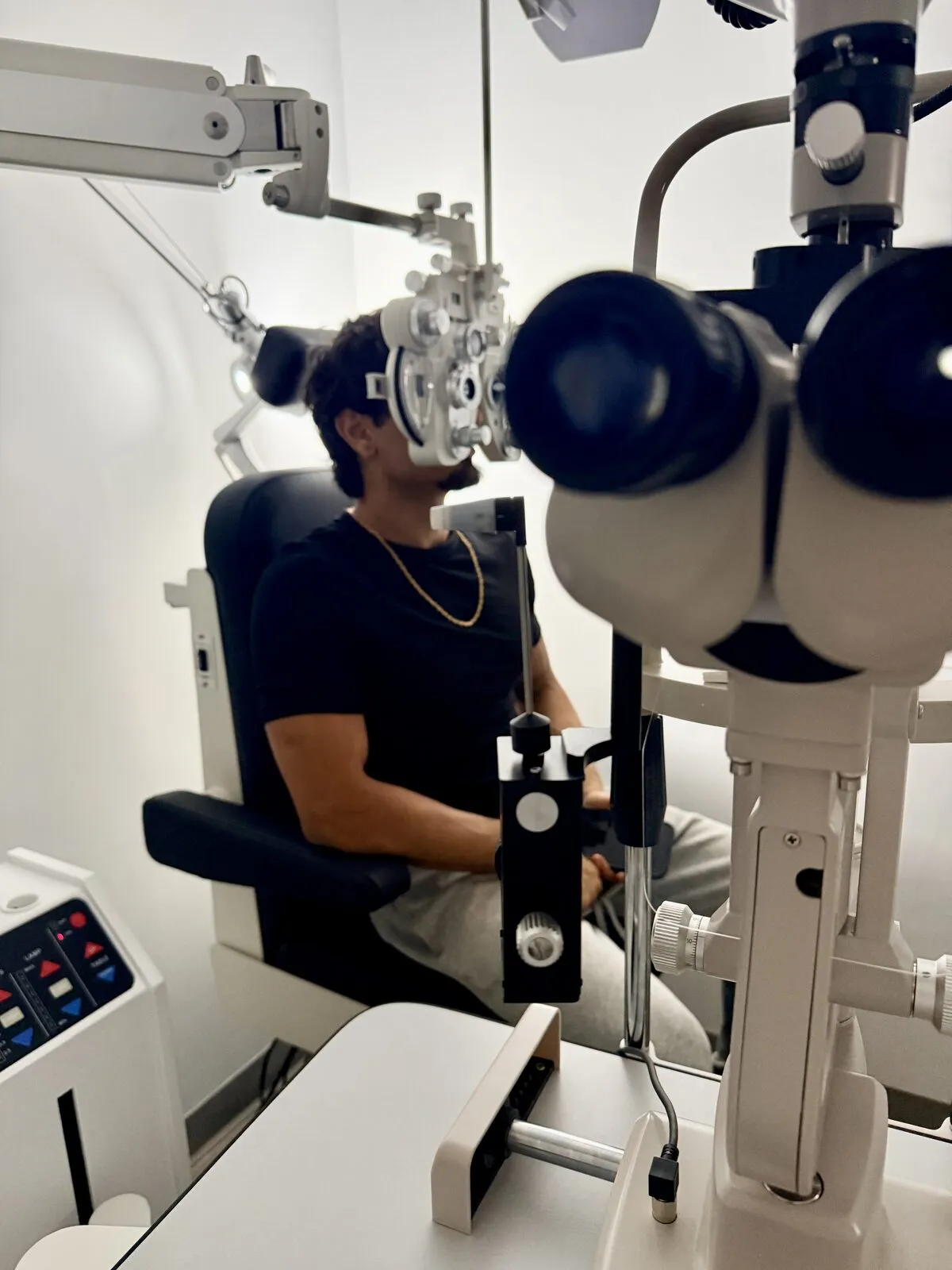
For patients in Aurora, Newmarket, Richmond Hill, Thornhill, and Vaughan, Dr. Roxanna Gangi commonly sees these early symptoms during a comprehensive eye exam. Most patients are still seeing reasonably well in the distance. The issue is usually reading, phones, screens, menus, and close work becoming more tiring than before.
What Is Presbyopia?
Inside the eye is a natural lens that changes shape to help focus at different distances.
When we are younger, that lens is flexible and adjusts easily. Over time, it gradually stiffens. As a result, focusing on nearby objects becomes harder.
This is called presbyopia.
Common symptoms include:
- blurry near vision after 40
- difficulty reading small print
- eye strain while reading
- headaches after prolonged screen use
- needing brighter light to read
- holding books or phones farther away
Presbyopia is not an eye disease. It is a very normal part of aging. However, that does not mean every near vision problem should automatically be ignored.
It Is Not Always Just "Getting Older"
Many patients assume they only need cheap reading glasses from a pharmacy.
Sometimes that works temporarily. Sometimes it does not.
Dry eye disease, cataracts, diabetes related vision changes, medication side effects, and other eye health conditions can also affect near vision and focusing ability. Patients often describe fluctuating vision that feels clear one moment and blurry the next, especially after long hours on screens.
That is one reason why Understanding Dry Eye Disease and Modern Treatment Options becomes increasingly relevant after 40. Dry eye and presbyopia often overlap, especially for patients spending long hours on computers or wearing contact lenses daily.
A proper eye exam helps determine whether the issue is straightforward presbyopia or whether another condition may also be contributing.
Why Screen Time Makes Presbyopia Feel Worse
Many adults first notice presbyopia while working.
Phones, laptops, tablets, and dual monitor setups force the eyes to constantly focus at near distances throughout the day. Even though screens do not directly cause presbyopia, they absolutely make the symptoms more noticeable.
People often report:
- tired eyes by evening
- difficulty shifting focus between near and far
- blurry vision late in the workday
- headaches around the eyes or forehead
- needing larger fonts
This is also why patients with heavy digital lifestyles may benefit from reading The 20 20 20 Rule and Digital Eye Strain to reduce visual fatigue during the day.
Reading Glasses Are Not the Only Presbyopia Solution
Many people think the only solution is over the counter readers.
In reality, modern presbyopia solutions are much more personalized than they used to be.
Depending on lifestyle, patients may benefit from:
- customized progressive lenses
- office or computer glasses
- multifocal contact lenses
- separate reading glasses
- digital workspace lenses
- dry eye treatment combined with prescription correction
Someone who spends all day on spreadsheets has different visual needs than someone who drives long distances or spends more time outdoors.
That is why presbyopia treatment should fit the patient's real daily life instead of just correcting small print.
Patients comparing different vision correction methods may also find Glasses vs Contacts: Choosing the Best Vision Correction for Your Lifestyle helpful when deciding which approach feels most comfortable.
What About Presbyopia Eye Drops?
One of the newer discussions in eye care is prescription eye drops for presbyopia.
In the United States, some FDA approved drops are designed to temporarily improve near vision by gently reducing pupil size and increasing depth of focus.
Patients in Ontario often ask whether these drops are available in Canada yet.
At the moment, these treatments are still limited in Canada and are not yet part of standard routine prescribing. Health Canada reviews medications carefully before widespread approval and distribution.
As newer presbyopia treatment options continue developing, comprehensive eye exams become even more important because not every solution works equally well for every patient.
Why Eye Exams Become More Important After 40
Presbyopia itself is normal.
Ignoring vision changes completely is not always a good idea.
After 40, regular eye exams become increasingly important because many eye diseases develop gradually and without obvious symptoms early on. Conditions such as glaucoma, cataracts, retinal disease, and diabetes related eye changes may begin developing during this stage of life.
For adults over 65, Senior Eye Exams in Ontario become especially important for monitoring long term eye health and preserving independence and visual function.
Dr. Roxanna Gangi provides eye care across Aurora, Newmarket, Richmond Hill, Thornhill, Vaughan, and surrounding York Region communities. You can learn more about her professional background and patient approach on the About Dr. Roxanna Gangi page.
Finding the Right Presbyopia Treatment
The good news is that presbyopia is very manageable.
The key is finding a solution that fits your lifestyle, your work, your screen habits, and your long term visual comfort.
For some people, simple reading glasses are enough. Others feel much more comfortable with progressive lenses or multifocal contact lenses. Some patients first need treatment for dry eye before their near vision stabilizes properly.
A comprehensive eye exam can help determine which presbyopia solutions make the most sense for your eyes and daily routine.
If you are noticing blurry near vision after 40, struggling with reading, or feeling more eye strain during screen use, you can also book an appointment with Dr. Roxanna Gangi for a personalized eye assessment in Aurora, Newmarket, Richmond Hill, Thornhill, or Vaughan.
Ready to book your eye exam?
Book an appointment with Dr. Roxanna Gangi today at the Toronto and York Region location most convenient for you.
Book an Appointment