Is Your Child Always Rubbing Their Eyes? Here's Why
Written or medically reviewed by Dr. Roxanna Gangi, Optometrist
Few parenting worries feel as small — yet as persistent — as watching your child rub their eyes over and over. Most parents assume it is tiredness, a bit of screen time, or a habit picked up somewhere along the way. After decades of caring for children in my clinical practice, first as an ophthalmologist overseas and now as Dr. Roxanna Gangi, Optometrist in Ontario, I can tell you that constant eye rubbing is one of those quiet symptoms I always take seriously. It is often the very first clue a child gives us that something in their visual system needs attention.
Why children rub their eyes in the first place
Children rub their eyes for many of the same reasons adults do — they feel itchy, dry, tired, or irritated. The difference is that a child usually cannot describe what they are feeling. A four-year-old will not walk up to you and say "my eyes feel gritty when I focus" or "the light hurts when I read." Instead, they rub. And they keep rubbing until whatever is bothering them either goes away, or an adult notices.
What concerns me most is not the occasional rub after a nap or after a long car ride. It is the pattern. When rubbing happens every day, especially during reading, homework, screen use, or right after school, that is when I start asking parents to bring their child in for a proper look.
The most common reasons I see in clinic
When a parent tells me their child is always rubbing their eyes, my mind runs through a short mental list. It usually falls into one of four categories, and each one changes how I examine that child.
1. An uncorrected vision problem
This is by far the most common reason. When a child cannot see clearly — whether that is farsightedness, astigmatism, or an early stage of nearsightedness — their eyes work overtime to compensate. That extra focusing effort makes the eyes feel tired, achy, and irritated, which naturally leads to rubbing. Many parents are surprised to learn that children with real vision problems often pass basic school screenings, because those screenings only test distance vision on a chart, not how the eyes work together up close.
2. Allergies
Ontario parents know this one well. Between spring pollen, cats and dogs at home, dust mites, and grass in the summer, allergic eye disease is everywhere. Allergy rubbing is usually paired with watery eyes, redness, and sometimes puffy eyelids. The tricky part is that allergies and dry eye can look almost identical, and children rarely have the vocabulary to tell them apart.
3. Dry or irritated eyes from screens
Ten years ago, dry eye in children was rare in my exam room. Today, I see it weekly. Tablets, phones, and remote learning have changed how much time young eyes spend focused up close, and children blink far less when they are staring at a screen. The result is burning eyes, watery eyes (a reflex response to the dryness), and — you guessed it — rubbing. A short digital eye strain self-check can give you a rough sense of whether your child's habits are pushing them into strain territory.
4. Something physical — an eyelash, a stye, or an infection
Sometimes the answer is genuinely mechanical. A tiny eyelash under the lid, a small stye, blepharitis along the lash line, or the beginning of pink eye can all cause a child to rub relentlessly on one side. When rubbing is one-eyed and paired with redness or discharge, I want to see that child sooner rather than later.
Why constant rubbing worries me clinically
Rubbing itself is not harmless. In my years of clinical practice I have seen children who developed corneal irritation, worsening astigmatism, and in a small number of cases a condition called keratoconus that has been linked to years of aggressive eye rubbing. This is not something I mention to frighten parents — I mention it because the earlier we identify why a child is rubbing, the easier it is to protect the front surface of their eyes for the long term.
There is also the developmental side. A child whose eyes feel uncomfortable all day is a child who avoids reading, avoids close work, and sometimes gets labelled as inattentive when the truth is much simpler: their eyes are working too hard.
What I look at during a children's eye exam
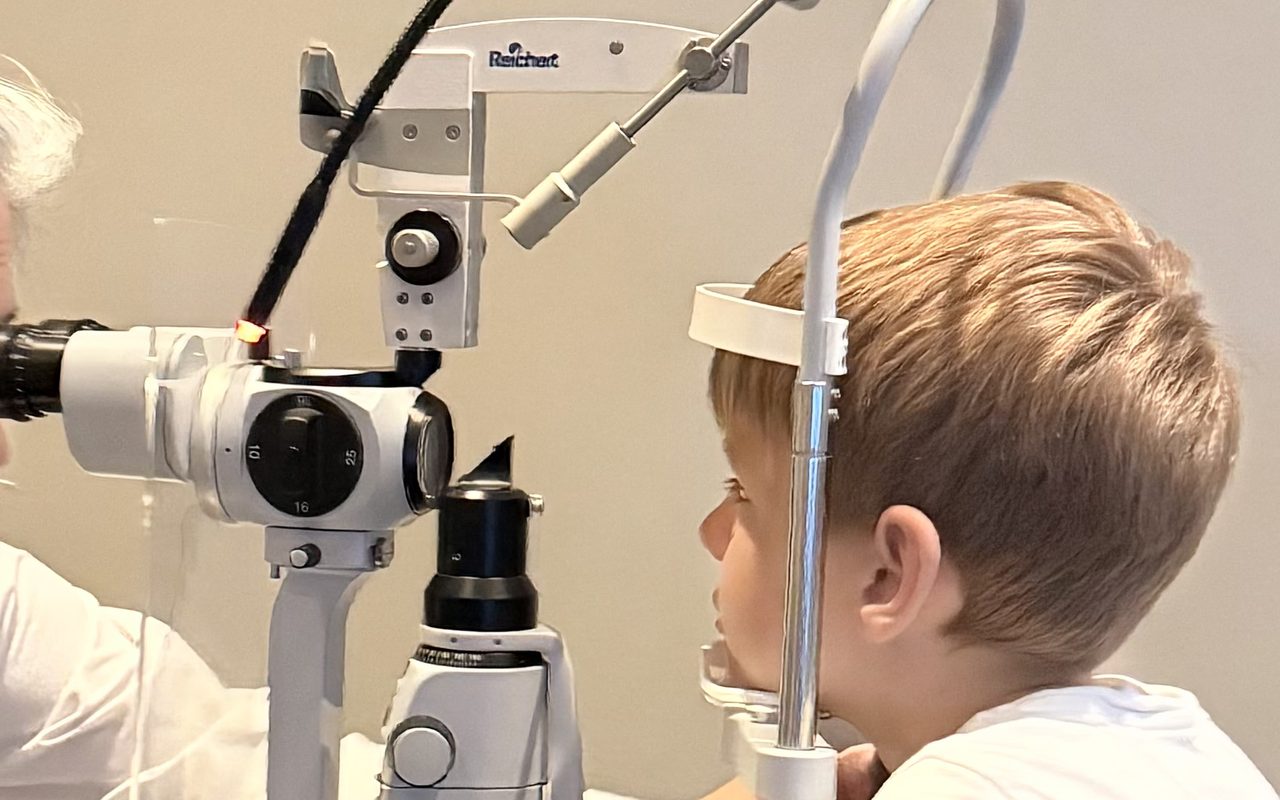
A proper children and family eye exam is very different from the vision screening a child receives at school or at the pediatrician's office. When I see a child who has been rubbing, I check refraction (whether they need glasses), how their two eyes team up at near, their focusing flexibility, the health of the tear film, the eyelids and lash line, and the surface of the cornea. Very often, by the end of that exam, we know exactly why the rubbing is happening — and just as importantly, what to do about it.
For older children and teens, a full comprehensive eye exam also lets me check the back of the eye, which matters more than parents realize as children grow into the years when myopia can progress quickly.
When the answer is dry or irritated eyes
If the exam points toward a tear-film issue rather than a refractive one, I take time to look at the meibomian glands along the lids and the tear breakup time. A tailored dry eye assessment in a child usually leads to simple, practical steps — better hydration, screen-time structure, warm compresses, sometimes preservative-free drops — long before anything more involved is needed.
Small changes that often help right away
While you wait for an appointment, there are a few things I routinely suggest to parents:
- Watch for the 20-20-20 pattern — every 20 minutes of near work, 20 seconds looking 20 feet away.
- Keep screens at least an arm's length away and slightly below eye level.
- Make sure the room is well lit; children rub more in dim reading conditions.
- If you suspect allergies, wash your child's face and hands after outdoor play and keep the pillowcase clean.
- Discourage forceful rubbing gently — offer a cool compress or artificial tears (age-appropriate, preservative-free) instead.
When to book sooner rather than later
Bring your child in without waiting for the annual exam if you notice any of the following: rubbing on only one side, rubbing with visible redness or discharge, complaints of blurred vision, headaches after school, sensitivity to light, or a sudden increase in how often they rub. These are the patterns that most often turn out to be more than a habit.
The good news is that almost everything on this list has a clear, treatable answer. A child who has been rubbing their eyes for months can often walk out of a single exam with the reason identified and a plan in place — glasses if they need them, allergy management if that is the trigger, or a simple dry-eye routine if their tear film needs support. What matters most is not guessing, but looking properly, once.
Frequently asked questions
Is it bad if my child rubs their eyes a lot?
Occasional rubbing is normal. Rubbing that happens daily — especially during or after reading, homework, or screen use — is a signal worth investigating. Repeated forceful rubbing can, over time, contribute to corneal irritation and, in rare cases, changes in the shape of the cornea, so it is best to identify the cause early.
How can I tell if my child needs glasses or just has allergies?
Allergy rubbing usually comes with watery eyes, redness, sneezing, or a runny nose, and often flares with seasons or exposure to pets. Vision-related rubbing tends to appear during near work — reading, homework, tablets — and may come with headaches, squinting, or losing their place on the page. A proper eye exam is the only reliable way to tell them apart.
At what age should my child have their first eye exam?
In Ontario, a comprehensive eye exam is recommended by age 3, and every year after that. If you notice constant eye rubbing, squinting, or an eye that turns in or out, book sooner — regardless of age.
Can screen time cause eye rubbing in kids?
Yes. Children blink far less while using tablets, phones, and computers, which dries the eye surface and triggers rubbing. The 20-20-20 rule, better lighting, and preservative-free artificial tears often help, but persistent symptoms should be evaluated.
When should I take my child to the eye doctor for rubbing?
Book an appointment if rubbing is on one side only, if there is redness or discharge, if your child complains of blurred vision or headaches, if they are sensitive to light, or if rubbing has been going on for weeks. These patterns are usually more than a habit and deserve a proper look.
Ready to book your eye exam?
Book an appointment with Dr. Roxanna Gangi today at the Toronto and York Region location most convenient for you.
Book an Appointment