Nutrition for Sight: Top Foods to Help Protect Your Vision
Written or medically reviewed by Dr. Roxanna Gangi, Optometrist
Most people think about food in terms of weight, energy, cholesterol, or blood sugar.
But your eyes are part of that story too.
The back of the eye is full of delicate tissue, tiny blood vessels, and light sensitive cells that work all day without you thinking about them. The macula, the small central part of the retina, is especially important. It helps you read, drive, recognize faces, and see fine detail. It is basically where your “4K vision” happens.
That is why Dr. Roxanna Gangi often reminds patients that an eye health diet is not about one miracle food. It is about giving the eye the nutrients it needs to stay healthier over time.
Food cannot promise that you will never develop macular degeneration. It cannot replace an eye exam. But the right habits may help support the retina, reduce some risk factors, and protect the parts of your vision that matter most.
Why nutrition matters for your eyes
Your retina is exposed to light and oxygen every day. That creates something called oxidative stress.
Think of it like wear and tear.
Just like sunlight can fade furniture over time, light and oxygen can place stress on the cells inside the eye. Antioxidants from food help defend those cells.
This is the real reason people talk about vitamins for eyes. They are not magic. They are support.
The American Optometric Association notes that nutrients such as lutein, zeaxanthin, vitamin C, vitamin E, zinc, and omega 3 fatty acids can play a role in supporting eye health.
The goal is not to eat perfectly. The goal is to eat in a way that gives your eyes a better chance.
Leafy greens: small foods, big benefits
Spinach, kale, Swiss chard, romaine lettuce, arugula, and collard greens are some of the best foods for the macula.
They contain lutein and zeaxanthin, two nutrients that collect in the macula and help support central vision.
A simple way to picture them is like natural sunglasses inside the eye. They help filter certain types of light and support the tissue responsible for sharp, detailed vision.
You do not need to become obsessed with kale. Add spinach to eggs. Put romaine in a wrap. Add arugula beside dinner. Blend greens into soup.
Small, repeated habits usually beat one dramatic health kick.
Colourful vegetables are not just for decoration
Carrots are famous for eye health, but they are only part of the picture.
Orange peppers, sweet potatoes, squash, corn, carrots, and red peppers all bring helpful nutrients to the table. The more colour on your plate, the wider the mix of antioxidants and plant nutrients.
A beige diet usually means your eyes are missing out.
Dr. Roxanna Gangi often explains it this way: your eyes do not need one perfect ingredient. They need variety. Green, orange, red, yellow, and purple foods all bring something different.
Fish and omega 3 fats
Fatty fish like salmon, sardines, trout, mackerel, and herring are rich in omega 3 fatty acids.
Omega 3 fats are often discussed for heart health, but they also matter for the eyes. They may support the retina and can also play a role in tear quality, which is why they often come up in conversations about dry eye.
This is where eye health and whole body health overlap.
The eye is not floating separately from the rest of you. Good circulation, healthy blood vessels, and better inflammation control all matter.
If you do not eat fish or you are thinking about omega 3 supplements, speak with Dr. Roxanna Gangi first, especially if you take blood thinners or have a medical condition.
Nuts, seeds, beans, and lentils
Almonds, walnuts, chia seeds, flax seeds, pumpkin seeds, lentils, chickpeas, and beans are all useful additions to an eye friendly diet.
They can provide vitamin E, zinc, fibre, healthy fats, and plant based nutrients.
Zinc is important because it helps vitamin A support normal vision function. Fibre matters because blood sugar control matters. And blood sugar control matters because diabetes can damage the tiny blood vessels in the retina.
That is why diet and vision loss prevention are connected.
If diabetes or blood sugar is part of your health picture, read our related article on diabetic eye exams and why they matter.
Fruits rich in vitamin C
Vitamin C is another important antioxidant for eye health.
You can find it in kiwi, oranges, strawberries, grapefruit, bell peppers, and broccoli.
Vitamin C helps support blood vessels and tissue health. Since the eye depends on healthy blood flow and delicate structures, this matters more than people realize.
Again, this does not need to be complicated.
Add berries to breakfast. Eat a kiwi. Slice peppers with lunch. Put broccoli beside dinner.
The best diet is the one you can actually keep doing.
Do eye vitamins help?
Sometimes yes. Sometimes no.
This is where people need proper advice.
Certain eye vitamin formulas may help some people with specific stages of age related macular degeneration. But that does not mean everyone should start taking eye supplements.
More is not always better. Some vitamins can interact with medications or be unsuitable for certain people. Smokers and former smokers, for example, need to be careful with some formulas that contain beta carotene.
So before buying vitamins for eyes, it is better to know what your eyes actually need.
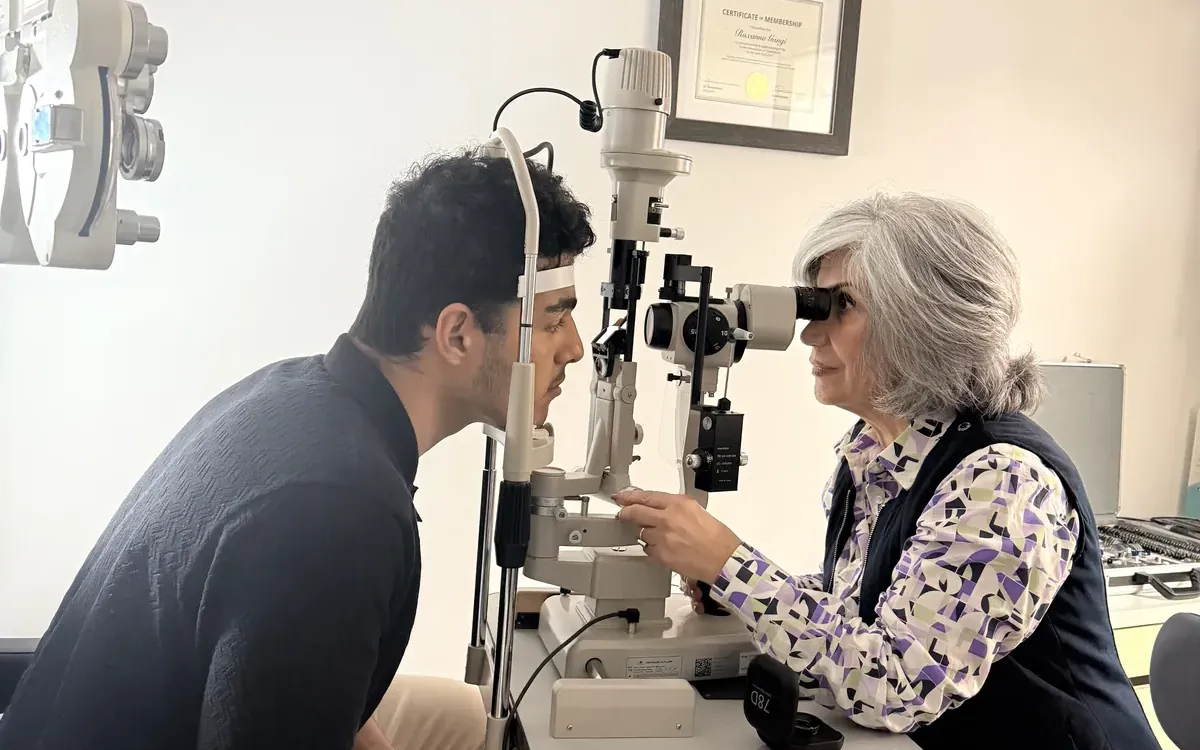
Dr. Roxanna Gangi can check the retina, review your risk factors, and help you understand whether supplements make sense for you.
Food helps, but it does not replace an eye exam
A healthy diet can support your eyes.
But it cannot show whether the macula is already changing. It cannot measure eye pressure. It cannot examine the optic nerve. It cannot check the retina in the way a proper eye exam can.
Your eyes are like a mirror for your health, but someone still has to look into that mirror carefully.
That is why nutrition and eye exams should work together.
You can start with helpful awareness tools through online tests, but online tools cannot replace a proper retinal and eye health assessment. To understand your actual eye health, visit the services page or learn more about Dr. Roxanna Gangi.
A simple eye health diet
For most people, an eye friendly diet is not extreme.
It looks like this:
- Leafy greens several times a week
- Colourful vegetables daily
- Fatty fish when appropriate
- Nuts, seeds, beans, or lentils regularly
- Fruits rich in vitamin C
- Less ultra processed food
- Better blood sugar and blood pressure control
That is not a trend. It is basic long term eye care.
If you are worried about macular degeneration, family history, diabetes, central vision changes, or anything that feels different with your sight, book an appointment with Dr. Roxanna Gangi.
Good food can help support your vision.
A comprehensive eye exam helps you understand what your eyes actually need.
Dr. Roxanna Gangi welcomes patients across the GTA. See all clinic locations to find the most convenient office for you.
Ready to book your eye exam?
Book an appointment with Dr. Roxanna Gangi today at the Toronto and York Region location most convenient for you.
Book an Appointment