Glaucoma: Why Good Vision Doesn't Always Mean Healthy Eyes
Written or medically reviewed by Dr. Roxanna Gangi, Optometrist
One of the most common things I hear from patients is:
"My vision seems fine, so I don't think I need an eye exam yet."
I understand why people think that way. If you're reading comfortably, driving without difficulty, and not experiencing any eye pain, it's easy to assume everything is healthy.
The problem is that some eye diseases don't announce themselves.
Glaucoma is one of them.
As Dr. Roxanna Gangi, one of the reasons I spend so much time educating patients about glaucoma is because it can quietly damage vision for years before a person notices anything is wrong. By the time symptoms become obvious, some of that vision loss may already be permanent.
The good news is that glaucoma can often be detected early through routine eye examinations, long before it starts affecting everyday life.
What Exactly Is Glaucoma?
Glaucoma is a disease that damages the optic nerve—the structure that carries visual information from your eyes to your brain.
Your eyes can capture a perfectly clear image, but if the optic nerve becomes damaged, that information cannot be transmitted properly.
In many cases, glaucoma develops slowly. The earliest damage often affects peripheral vision, also known as side vision. Because your central vision remains clear during the early stages, you may not notice any changes at all.
This is why glaucoma is often called the "silent thief of sight."
I've had patients genuinely surprised when we discuss early glaucoma findings because they feel their vision is completely normal. They can still read, work on a computer, watch television, and use their phone without any concerns.
Unfortunately, glaucoma doesn't always wait for symptoms before causing damage.
Why Glaucoma Is So Easy to Miss
One of the most challenging aspects of glaucoma is how gradually it progresses.
Vision loss from glaucoma typically doesn't happen overnight. It develops slowly, sometimes over many years.
As peripheral vision becomes affected, the brain often adapts remarkably well. Instead of noticing obvious blind spots, many people simply adjust without realizing changes are occurring.
This means glaucoma may already be affecting daily visual function before a person becomes aware of it.
Over time, untreated glaucoma can make it more difficult to:
- Notice vehicles, cyclists, or pedestrians approaching from the side
- Drive safely in busy environments
- Walk confidently through crowded spaces
- Navigate stairs and curbs
- Maintain overall awareness of your surroundings
What makes early detection so important is that vision lost from glaucoma generally cannot be restored. Our goal is to identify the disease before significant damage occurs.
Not All Glaucoma Is the Same
Open-Angle Glaucoma
This is the most common type of glaucoma.
It typically develops gradually and often causes no symptoms during its early stages. There is usually no pain, redness, or sudden change in vision.
For many patients, a routine comprehensive eye exam is the only reason the condition is discovered before significant vision loss occurs.
Normal-Tension Glaucoma
Some people develop glaucoma even though their eye pressure falls within what would normally be considered a healthy range.
This surprises many patients.
It also highlights why simply checking eye pressure isn't enough. A proper glaucoma evaluation involves looking at the entire picture, including the optic nerve and visual function.
Angle-Closure Glaucoma
Although less common, angle-closure glaucoma can become serious very quickly.
Symptoms may include:
- Severe eye pain
- Sudden blurred vision
- Headache
- Nausea
- Halos around lights
This situation requires urgent medical attention.
Fortunately, many people who are at risk can be identified before an emergency occurs during a routine eye examination.
Secondary Glaucoma
Sometimes glaucoma develops because of another condition affecting the eye.
Examples may include eye injuries, inflammation, or the use of certain medications such as steroids.
Childhood Glaucoma
Although uncommon, glaucoma can occur in children and infants.
Because vision plays a critical role in learning and development, early diagnosis is extremely important.
How We Detect Glaucoma Before Symptoms Appear
One of the biggest misconceptions about eye exams is that they're only about determining whether you need glasses.
In reality, much of what we do involves looking for diseases that may not cause symptoms in their early stages.
Measuring Eye Pressure
Checking eye pressure is an important part of glaucoma screening.
Higher-than-normal eye pressure can increase the risk of developing glaucoma and may indicate that additional monitoring is needed.
However, eye pressure alone cannot diagnose glaucoma. Some people with elevated pressure never develop the disease, while others develop glaucoma despite having normal pressure readings.
That's why additional testing is so important.
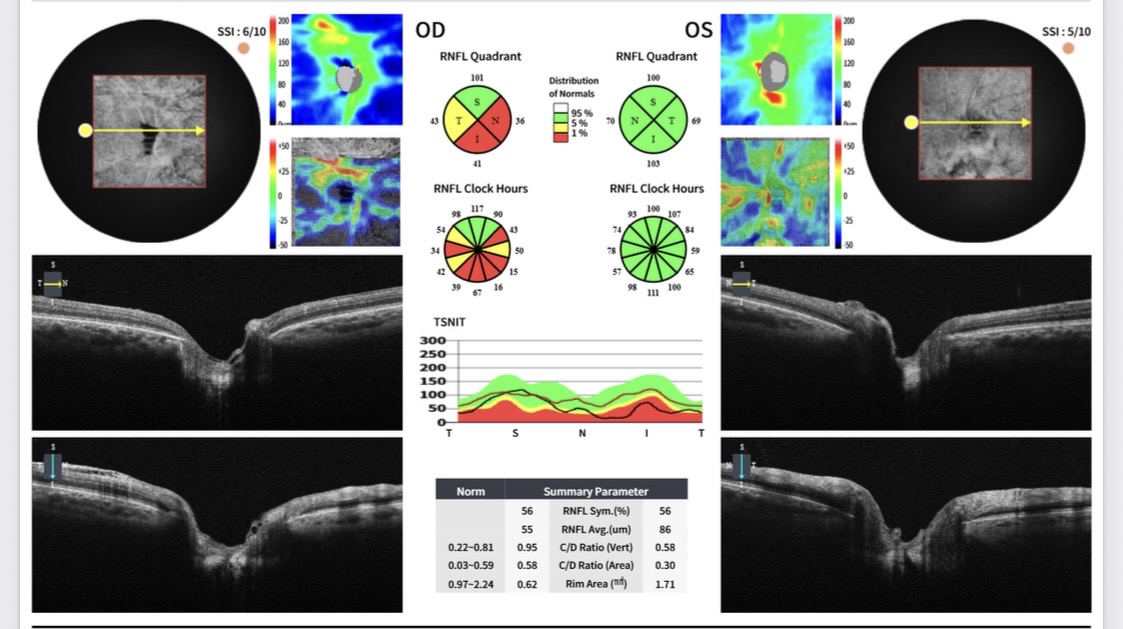
Examining the Optic Nerve
One of the most valuable parts of an eye examination is evaluating the optic nerve directly.
Using modern diagnostic technology and detailed clinical assessment, we can often identify subtle changes before a patient notices any symptoms.
Tools such as digital retinal imaging help us document the health of the optic nerve and compare findings over time.
These records become especially valuable when monitoring patients who may be at higher risk of glaucoma.
Visual Field Testing: A Critical Part of Glaucoma Care
If glaucoma tends to affect side vision first, how do we measure those changes?
This is where visual field testing becomes incredibly useful.
A visual field test evaluates how well you see throughout your peripheral vision. During the test, small lights appear in different areas while you focus straight ahead.
The test is painless, non-invasive, and provides information that a standard eye chart simply cannot.
Visual field testing helps us:
- Detect early vision loss
- Establish a baseline for future comparison
- Monitor disease progression
- Evaluate treatment effectiveness
- Identify changes that patients may not notice themselves
For patients with glaucoma—or those at increased risk—visual field testing is often one of the most important tools we use to monitor long-term eye health.
You can also learn more about advanced glaucoma testing and monitoring if you've been told you're at higher risk.
Who Should Pay Extra Attention to Glaucoma?
Anyone can develop glaucoma, but certain factors increase the likelihood.
You may be at higher risk if you:
- Are over age 40
- Have a family history of glaucoma
- Have diabetes
- Have high blood pressure
- Are significantly nearsighted
- Have experienced an eye injury
- Use steroid medications for extended periods
If one or more of these factors apply to you, regular eye examinations become even more important.
This is especially true because glaucoma often develops without warning signs.
What I Tell My Patients About Protecting Their Vision
If there's one message I hope patients take away from this article, it's this:
Don't wait for symptoms.
Many eye diseases—including glaucoma—can be present long before you notice changes in your vision.
Whether I'm seeing a patient from Aurora, Newmarket, Richmond Hill, Vaughan, or Thornhill, the conversation is often the same. People are relieved when we catch a problem early because early detection usually gives us more options for protecting long-term vision.
As Dr. Roxanna Gangi, I believe one of the most valuable things we can do is establish a baseline of your eye health before problems arise. Regular examinations allow us to track changes over time and identify concerns while they're still manageable.
If it has been a while since your last eye exam, or if glaucoma runs in your family, consider booking a comprehensive eye examination. A routine visit today may help protect your vision for many years to come.
Glaucoma is often silent—but it doesn't have to catch you by surprise.
Ready to book your eye exam?
Book an appointment with Dr. Roxanna Gangi today at the Toronto and York Region location most convenient for you.
Book an Appointment