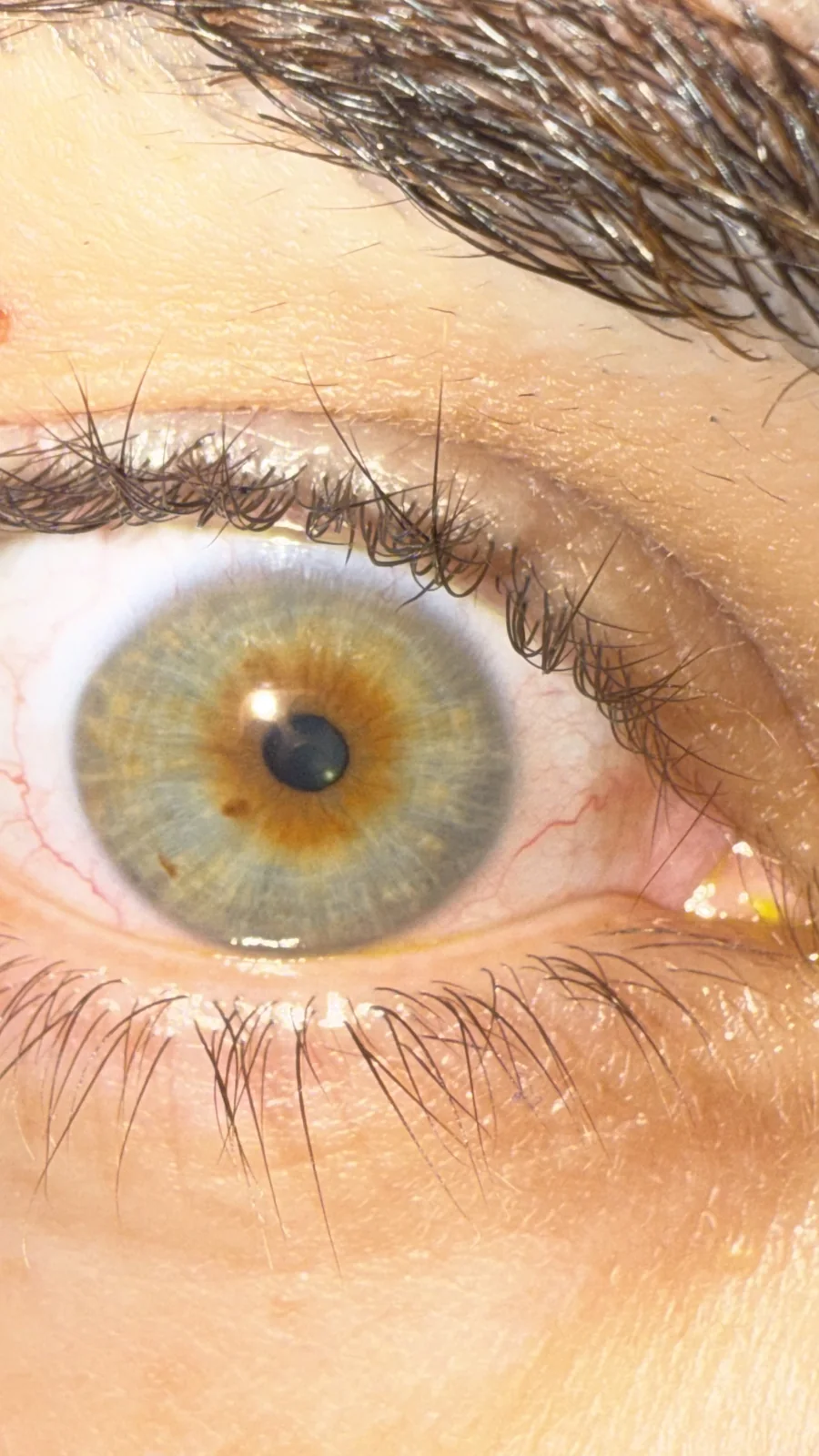
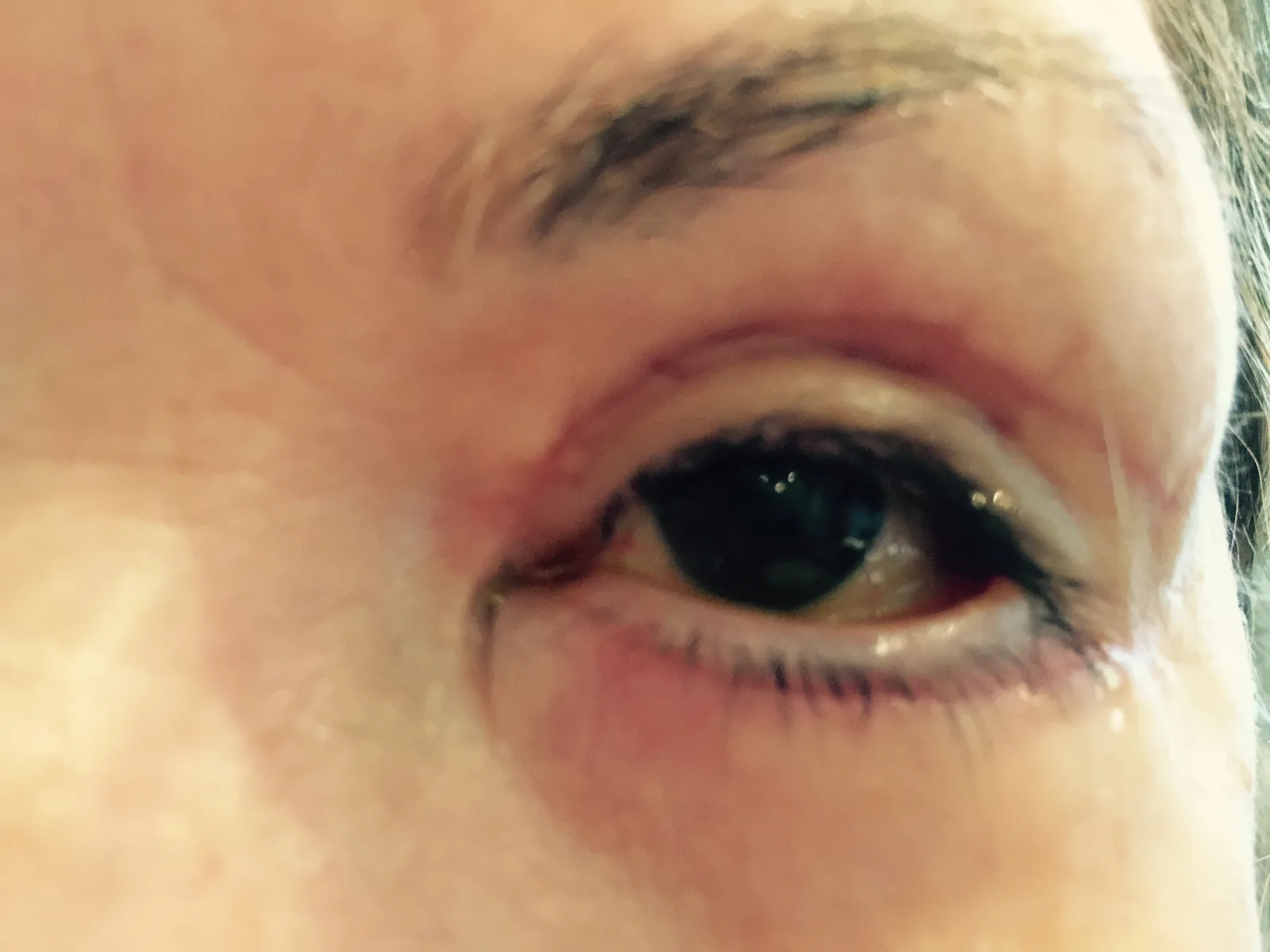
Red Eyes: Should You See a Pharmacist or an Optometrist?
Written or medically reviewed by Dr. Roxanna Gangi, Optometrist
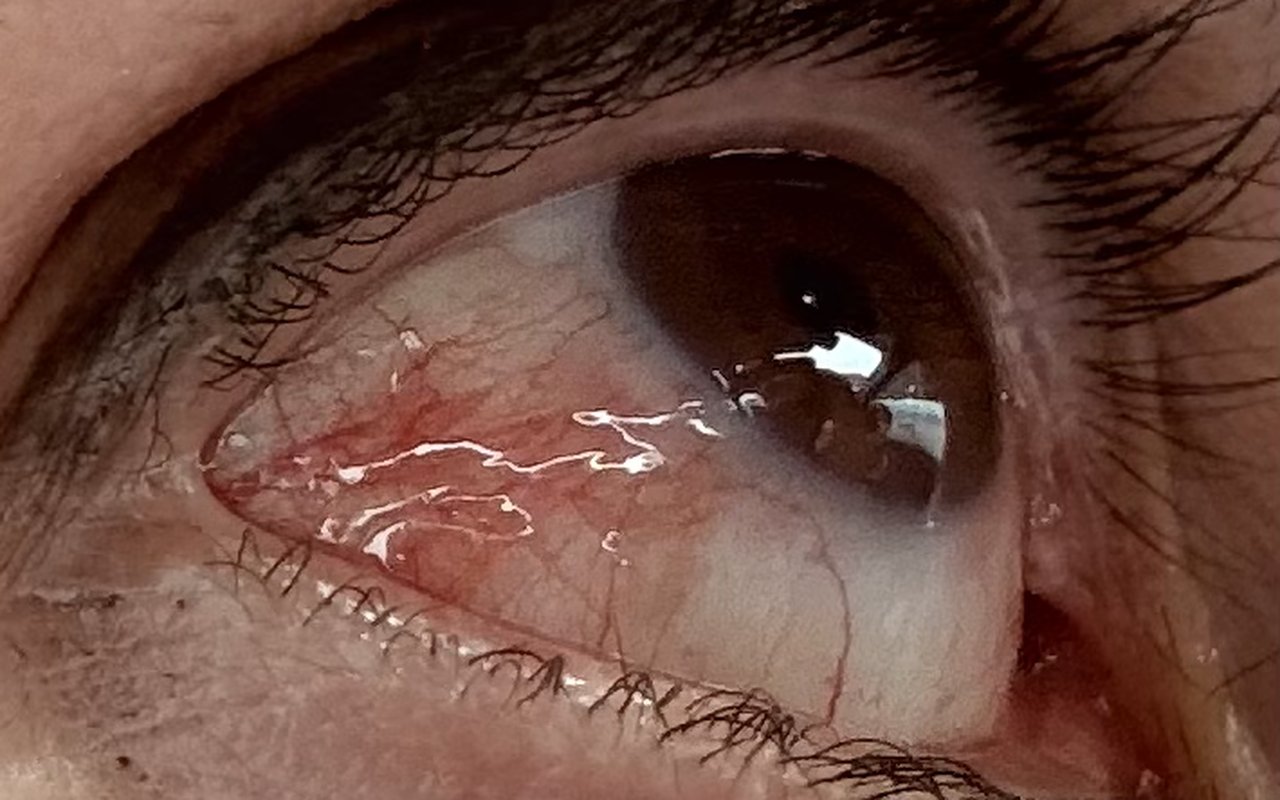
A red eye is one of the most common reasons patients call me, and almost all of them have already stood in front of a pharmacy shelf trying to choose between five bottles of drops. That instinct is understandable. Redness feels like a surface problem, and surface problems feel like something a bottle should fix. After more than thirty years in eye care — first as an ophthalmologist overseas, now as an optometrist practising in Ontario — the pattern I see most often is a patient who used drops for a week or two, felt slightly better, and only came in when the eye stopped improving.
Pharmacists are genuinely useful here. They know the medications, they can suggest lubrication or an antihistamine drop, and a good pharmacist will tell you when something sounds like it needs a doctor. What they cannot do is look inside your eye. That single limitation explains most of the delayed diagnoses I see.
Why two red eyes can look identical and be nothing alike
Redness, burning, watering, light sensitivity, discharge, that gritty feeling of something in the eye — these symptoms belong to almost every condition on my differential list. From across a room, or across a pharmacy counter, dry eye and a corneal ulcer can look the same.
What actually causes a red eye ranges from the harmless to the urgent: dry eye disease, seasonal allergy, viral or bacterial conjunctivitis, blepharitis, a contact lens overwear reaction, a corneal abrasion, uveitis, herpes simplex keratitis, a corneal ulcer, a minor injury, and occasionally acute angle-closure glaucoma. Several of those need treatment within days. One or two need it the same day.
The two I get asked about most are allergy and dry eye, partly because they overlap so often. If your eyes turn red at the same time every spring, or feel worse by mid-afternoon at a desk, it is worth understanding how eye allergies and dry eye differ before you commit to a drop, and a short dry eye symptom quiz gives you something concrete to bring to your appointment. When dry eye is the cause, treatment has moved well beyond artificial tears — there is a lot more available now, which I explain in more detail in my article on modern dry eye treatment, and it usually starts with a proper dry eye assessment rather than trial and error at the pharmacy.
What a slit lamp shows that the mirror cannot
The instrument that changes everything in a red eye visit is the slit lamp — a microscope with a narrow, adjustable beam of light. Under it I examine the cornea, the conjunctiva, the eyelid margins, the tear film, the front chamber of the eye, the iris and the surface of the lens, layer by layer, at high magnification.
With a drop of fluorescein dye, damage to the corneal surface lights up. Scratches, dry spots, ulcers and infiltrates that are completely invisible to the naked eye become obvious in seconds. This is the step nobody can skip. Without it, any recommendation — mine included — is an educated guess based on how the eye looks from the outside.
Bacterial conjunctivitis or herpes keratitis? The difference matters
This is the comparison I use with patients because it shows the stakes plainly.
Bacterial conjunctivitis usually brings redness, thick yellow or green discharge, lashes stuck together in the morning, and moderate irritation. Vision is generally unaffected. Most cases settle quickly once the right antibiotic is started.
Herpes simplex keratitis is a different problem entirely, because it involves the cornea itself. The eye is red and often painful, light becomes uncomfortable, vision may blur, and tearing increases. Under the slit lamp with dye, I look for a branching pattern on the cornea — a dendritic ulcer — that is close to diagnostic. It needs antiviral treatment, and it needs it promptly, because repeated or poorly managed episodes can leave corneal scarring that permanently reduces vision.
Both eyes are red. Both water. Both hurt a little. Only one of them is a threat to sight, and telling them apart is a magnification problem, not a guessing problem.
Where redness-relief drops quietly cause harm
The bottles that promise to whiten the eye work by constricting blood vessels. They do not treat anything. What concerns me is what happens next: the redness fades, the patient assumes the problem is resolving, and the underlying inflammation or infection continues unobserved for another week.
I also see leftover steroid drops from an old prescription used on a new red eye. Steroids on an untreated infection, particularly a herpetic one, can make it dramatically worse. And contact lens wearers who keep wearing lenses through a red eye are the group I worry about most, because a lens over a compromised cornea is how a small problem becomes a corneal ulcer.
What a red eye appointment with me actually involves
I start with history, because it usually points the way: when it began, whether one eye or both, contact lenses, recent illness, allergies, medications, any injury, and whether vision has changed. Then I check vision, examine the eye under the slit lamp, stain the cornea when the story calls for it, assess the tear film, measure eye pressure, and look at the internal structures. Many red eyes turn out to be part of a broader picture, which is why this often folds into a full comprehensive eye examination rather than a two-minute look.
By the end, you should leave knowing what you have, why you have it, what to use, and what should be better by when. If it belongs to a specialist, I arrange that. Most of what I treat sits within the range of everyday eye conditions I manage in clinic.
When a red eye should not wait
Please do not spend the weekend on drops if your red eye comes with real pain, light sensitivity, blurred or reduced vision, a sudden change in vision, heavy discharge, or a recent injury. The same applies if you wear contact lenses, or if symptoms have not clearly improved after a couple of days of over-the-counter treatment. And if it feels as though something is lodged in the eye, that is its own situation — I have written separately about why a foreign body sensation should not wait until tomorrow.
Common questions about red eyes
Can a pharmacist diagnose the cause of a red eye?
A pharmacist can suggest relief for mild, short-lived irritation and will often recognise when something needs examination. A diagnosis, though, depends on examining the cornea and the inside of the eye under magnification, which needs an optometrist.
How long should I try over-the-counter drops before seeing an optometrist?
For mild irritation with no pain and no change in vision, two or three days is reasonable. If there is pain, light sensitivity, blurred vision, or you wear contact lenses, do not wait at all.
Is pink eye always contagious?
No. Viral and bacterial conjunctivitis are contagious, but allergic and dry-eye redness are not. They can look very similar, which is exactly why the distinction is made in the exam chair rather than at home.
Are whitening or redness-relief drops safe to use?
Occasionally, for cosmetic use in a healthy eye, they are usually harmless. Used to cover up a symptom, they mask the very sign I rely on to judge whether an eye is improving or getting worse.
Does OHIP cover an urgent red eye visit in Ontario?
Medically necessary eye visits are covered for children under 20 and adults 65 and over, and for patients with certain medical conditions. For everyone else, coverage varies, and the front desk will confirm before you are seen.
A red eye is not a diagnosis — it is a symptom with a long list of possible causes, most of them straightforward and a few of them serious. If yours has lasted more than a few days, hurts, or has touched your vision at all, let me look at it properly.
Ready to book your eye exam?
Book an appointment with Dr. Roxanna Gangi today at the Toronto and York Region location most convenient for you.
Book an Appointment