What Treatments Are Available to Slow Myopia Progression in Children?
Written or medically reviewed by Dr. Roxanna Gangi, Optometrist
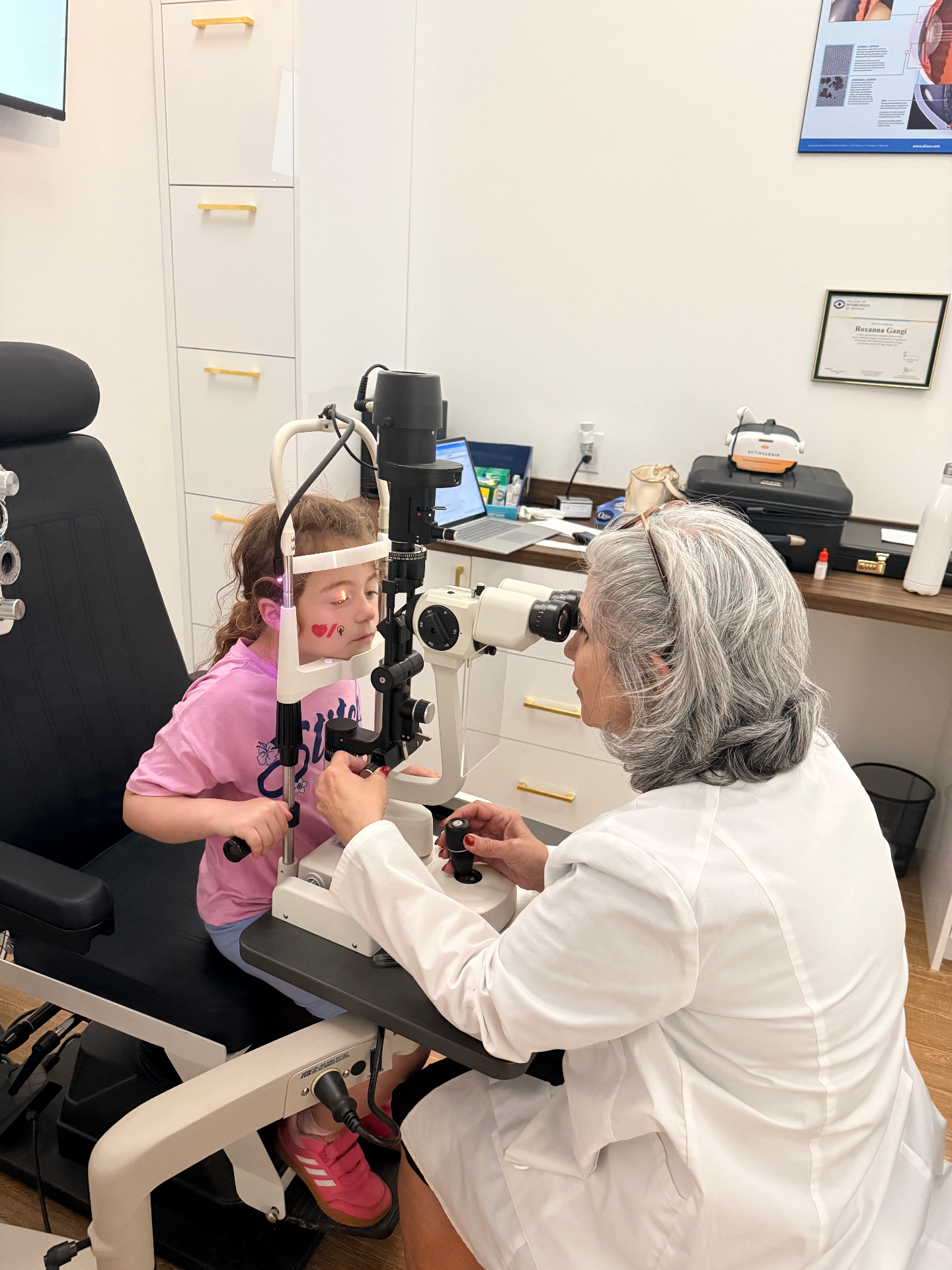
A parent sat in my exam room not long ago and asked a question I hear almost every week:
"My daughter's prescription went up again. Does this mean she's going to need stronger glasses every year?"
I could hear the frustration in her voice.
Many parents assume that once a child becomes nearsighted, all we can do is update the glasses prescription whenever it changes. For a long time, that was largely the approach.
Today, we have more options.
As Dr. Roxanna Gangi, one of the most encouraging conversations I have with parents is explaining that myopia management is no longer just about correcting blurry vision. In many children, we can also take steps to help slow the progression of myopia itself.
That matters because myopia is about more than glasses.
The stronger a prescription becomes over time, the higher the risk of certain eye conditions later in life. This is one reason why eye care professionals are paying much closer attention to childhood myopia than they did years ago.
The Biggest Mistake I See Parents Make
Most parents don't ignore their child's vision.
The mistake is usually something much more understandable.
They assume that a stronger prescription every year is simply normal and unavoidable.
Sometimes a child goes from a mild prescription to a significantly stronger one over only a few years. By the time parents start asking about treatment options, they wish they had known those options existed sooner.
That's why regular children's eye exams are so important. They allow us to track changes over time rather than reacting after significant progression has already occurred.
The Three Treatments I Discuss Most Often With Parents
When parents come in for a myopia management consultation, the conversation usually revolves around three main options.
Not every child is a candidate for every treatment, but these are the approaches we discuss most frequently.
MiSight® 1 Day Contact Lenses
One of the first questions I often hear is:
"Aren't contact lenses just another way to correct vision?"
Normally, yes.
MiSight® 1 Day lenses are different.
These daily disposable contact lenses were designed not only to improve distance vision but also to help slow myopia progression. They became the first contact lens approved by the U.S. FDA specifically for slowing myopia progression in children.
What parents often find surprising is how well many children adapt to them.
In fact, some children become more comfortable with contact lenses than their parents expect, especially if they're active in sports or dislike wearing glasses.
During a contact lens fitting, I assess whether MiSight lenses are a suitable option and discuss the responsibilities that come with contact lens wear.
Low-Dose Atropine Eye Drops
This is probably the treatment parents ask the most questions about.
The conversation usually starts the same way:
"You want my child to use eye drops every day?"
Then comes the second question:
"Is it safe?"
Low-dose atropine has been studied extensively and is now used around the world as part of childhood myopia management.
The concentrations used today are much lower than traditional atropine treatments, which helps reduce unwanted side effects.
Most children tolerate low-dose atropine very well.
Some may notice mild light sensitivity or minor focusing difficulties at near distances, depending on the concentration being used, but these effects are generally manageable.
The decision to recommend atropine depends on several factors, including the child's age, prescription, progression rate, and overall eye health.
Specialized Myopia Control Glasses
Not every child wants contact lenses.
Not every family is comfortable with eye drops.
Fortunately, glasses may also play a role.
Specialized myopia-control lenses look very similar to regular glasses, but the lens design is different. The goal is not only to provide clear vision but also to help reduce signals associated with continued eye growth.
Many parents appreciate this option because it feels familiar. Their child wears glasses as usual, but the lenses are designed with myopia management in mind.
Which Treatment Would I Recommend for My Own Child?
Parents occasionally ask me some version of this question.
The answer isn't as simple as choosing one treatment over another.
Every child is different.
A seven-year-old whose prescription is changing rapidly may not need the same approach as a twelve-year-old whose prescription has remained relatively stable.
When recommending treatment, I consider:
- Age
- Current prescription
- Family history
- Lifestyle
- Rate of progression
- Comfort with contact lenses
- Overall eye health
The best treatment is the one that fits both the child and the family while providing meaningful benefit.
Why Follow-Up Visits Matter
One thing I always emphasize is that myopia management isn't a one-time decision.
Children grow.
Their eyes grow too.
That's why regular follow-up visits are such an important part of the process.
During myopia management consultations, I monitor prescription changes, assess treatment effectiveness, and determine whether adjustments are needed.
Sometimes a treatment is working exactly as expected. Sometimes we need to modify the approach.
The goal is always the same: helping protect long-term vision and eye health.
What I Want Parents to Remember
If your child's prescription seems to be increasing every year, don't assume that's simply something you have to accept.
The earlier we identify progressive myopia, the more options we may have to help manage it.
As Dr. Roxanna Gangi, I want parents to know that today's conversation is very different from the one we were having years ago. We now have several evidence-based tools that may help slow myopia progression in many children.
If you're concerned about how quickly your child's prescription is changing, consider scheduling a children's eye exam or a myopia management consultation. Sometimes the most important step is simply finding out whether your child may benefit from treatment before the next prescription increase occurs.
Ready to book your eye exam?
Book an appointment with Dr. Roxanna Gangi today at the Toronto and York Region location most convenient for you.
Book an Appointment