The Rise of Myopia in Children: What Parents Need to Know
Written or medically reviewed by Dr. Roxanna Gangi, Optometrist
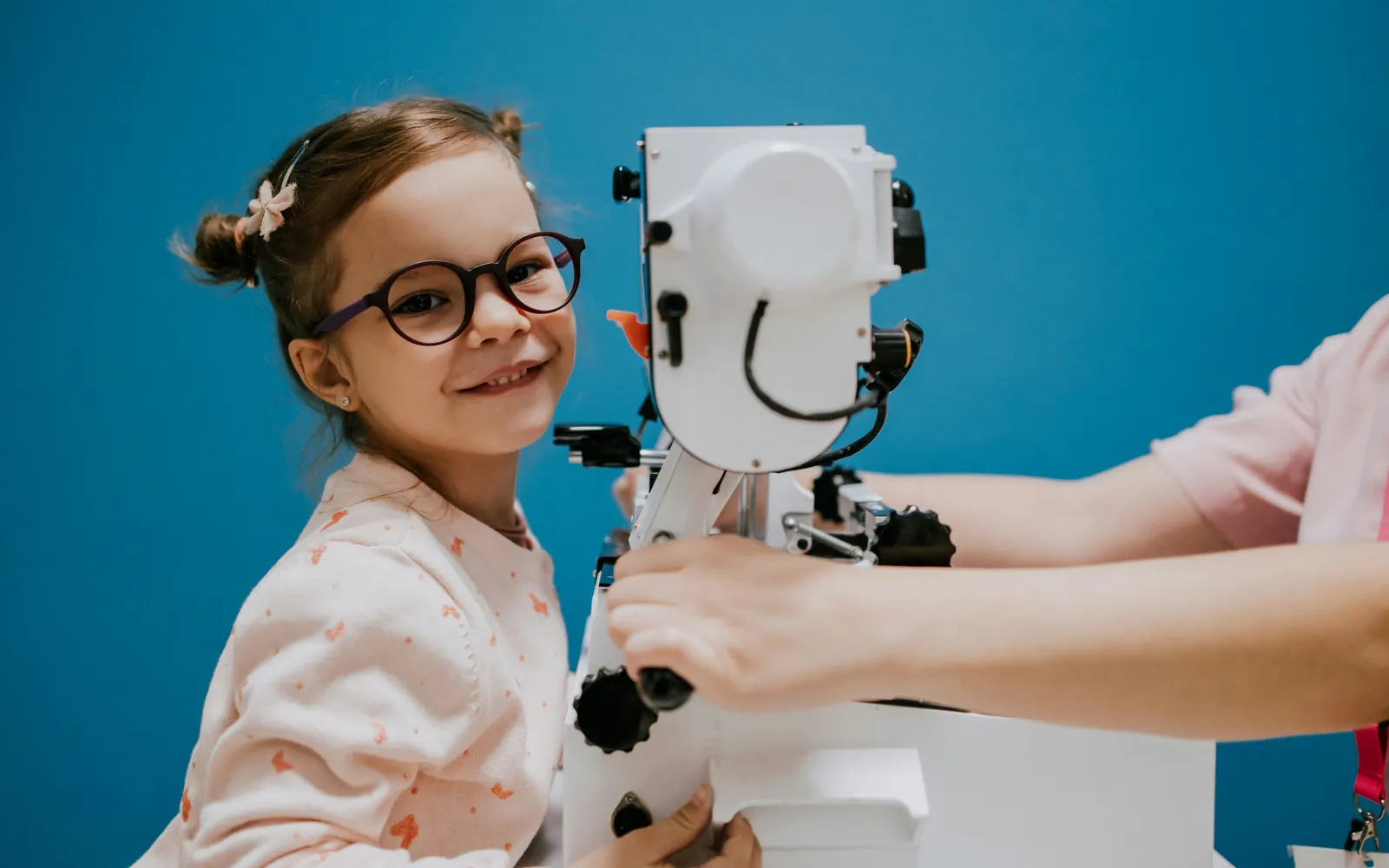
A child rarely says, “I think I am becoming nearsighted.”
They usually show it in smaller ways.
They squint at the board. Sit closer to the TV. Hold a tablet near their face. Lose interest in sports. Avoid reading from far away. Or say nothing at all, because they assume everyone sees the world the same way.
That is why childhood myopia can be easy to miss.
Myopia means nearsightedness. Close objects look clear, but far away objects look blurry.
Dr. Roxanna Gangi helps parents understand that myopia is not only about getting glasses. It is also about watching how the eye is growing.
Why childhood myopia is increasing
Children today spend more time indoors, more time on screens, and more time doing close work.
Genetics matter too. If one or both parents are nearsighted, the child has a higher chance of becoming nearsighted.
But lifestyle also plays a role.
The eye is designed to look near and far. When a child spends most of the day looking close, and not enough time outdoors, the visual system may be under extra pressure.
Think of the eye like a growing camera. If the shape grows too long, distance vision becomes blurry.
The American Optometric Association notes that children with progressive myopia may benefit from treatment options that help slow progression.
Glasses help, but progression matters too
Glasses help a child see clearly.
That is important. A child who cannot see the board may struggle in school, sports, and daily life.
But Dr. Roxanna Gangi also looks at whether the prescription is changing quickly.
Higher levels of myopia later in life may increase the risk of certain eye conditions. That is why nearsightedness treatment is not only about today’s clear vision. It is also about long term eye health.
Signs parents should watch for
Book a kids eye exam if your child squints, complains of blurry distance vision, sits close to screens, rubs the eyes, has headaches, avoids reading from the board, loses place while reading, or seems unusually tired after school.
Also book if there is a family history of myopia.
A child can pass a basic school vision screening and still need a full exam.
Online tools can be helpful for awareness, but online tests cannot properly check eye health, focusing, eye coordination, or myopia progression.
What can help slow myopia progression?
There is no one perfect answer for every child.
Depending on the exam, options may include myopia control glasses, specialty contact lenses, and low dose atropine drops, along with more outdoor time and better screen habits.
This is where new lens technology is becoming interesting. If you want to understand how newer devices and lenses are changing eye care, read Smart Glasses and Wearables: How Tech is Changing Eye Care.
The key is not to guess. The right plan depends on your child’s prescription, age, family history, lifestyle, and how quickly the eyes are changing.
Outdoor time still matters
One of the simplest habits is still one of the most helpful.
Children need time outdoors.
Outdoor light and distance viewing give the eyes a different kind of visual experience than screens and books. It also gives the focusing system a break.
This does not mean screens are forbidden. It means screen time should not become the whole visual diet.
Just like nutrition, the eyes need variety.
Why Dr. Roxanna Gangi looks at the whole child
A child’s eye exam is not just “Which lens is clearer?”
Dr. Roxanna Gangi looks at vision, eye health, focusing, eye teaming, family history, school habits, outdoor time, screen use, and whether the prescription is changing.
A child who reads constantly and has two nearsighted parents may need a different plan than a child with mild, stable myopia.
That is why early exams matter.
The takeaway for parents
If your child is squinting, struggling with distance vision, or overdue for an exam, do not wait for them to complain.
Children often adapt quietly.
If you are concerned about childhood myopia or nearsightedness treatment, book an appointment with Dr. Roxanna Gangi.
You can also visit the services page, learn more about Dr. Roxanna Gangi, or read the pillar article Why Your 2026 Eye Exam Is More Than a Prescription Update.
The best way to protect your child’s vision is with a comprehensive eye exam.
Related articles
- Smart Glasses and Wearables: How Tech is Changing Eye Care
- The 20 20 20 Rule: Ending Digital Eye Strain in the Remote Work Era
- Why Your 2026 Eye Exam Is More Than a Prescription Update
Dr. Roxanna Gangi welcomes patients across the GTA. See all clinic locations to find the most convenient office for you.
Ready to book your eye exam?
Book an appointment with Dr. Roxanna Gangi today at the Toronto and York Region location most convenient for you.
Book an Appointment