Why I Chose Optometry and Why I Still Love Eye Care
Written or medically reviewed by Dr. Roxanna Gangi, Optometrist
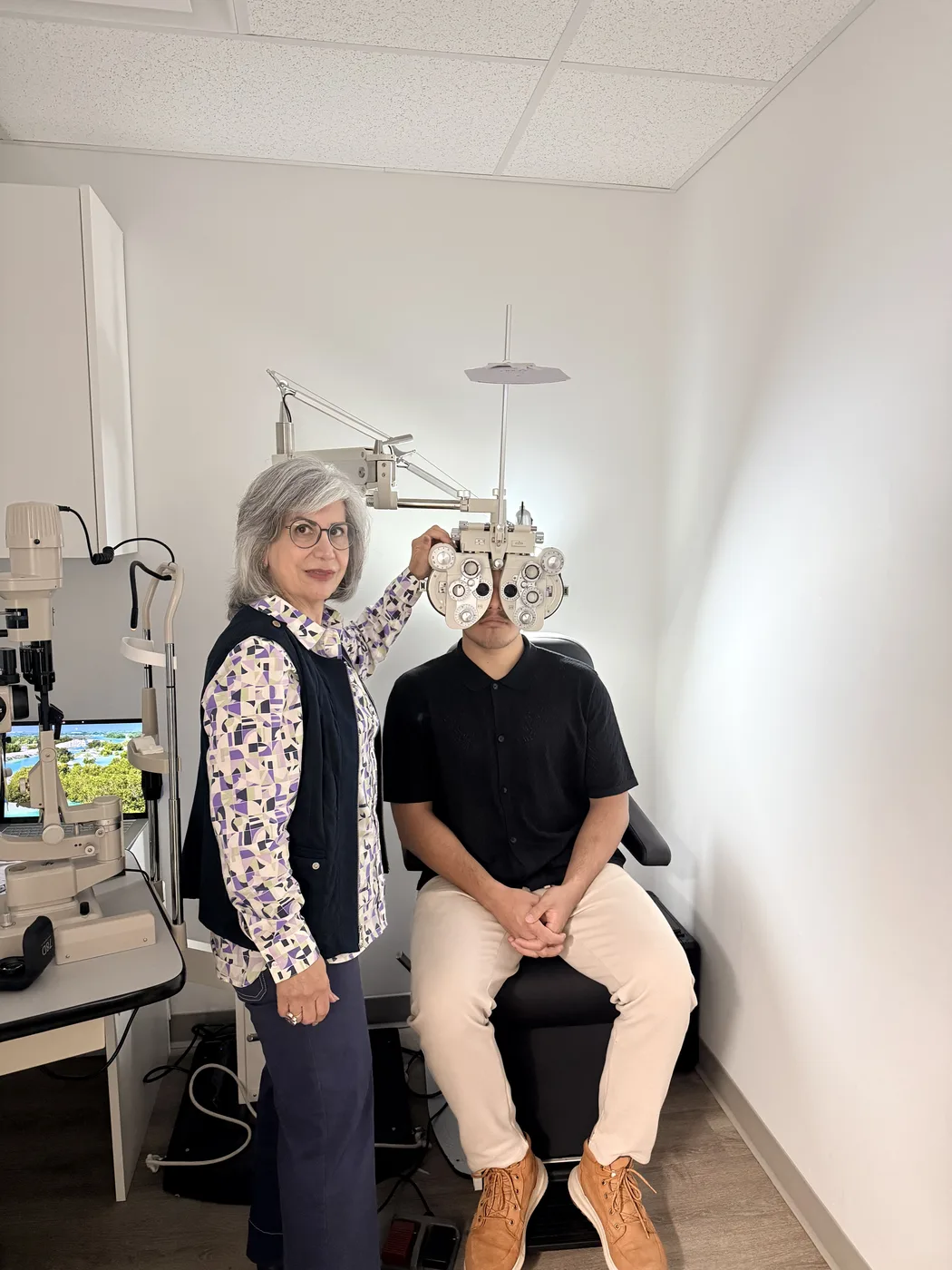
I have spent most of my professional life looking into people’s eyes, but what I have learned over the years is that eye care is never only about the eyes.
It is about the person sitting in front of me.
It is the child who cannot explain why reading feels hard. The parent who is worried because diabetes runs in the family. The senior who wants to keep driving safely. The patient considering LASIK or PRK but feeling nervous about whether it is the right decision. The person who thinks they only need new glasses, but actually needs a more careful look at the health of the eye.
That is why I still enjoy this work.
Before I became an optometrist in Canada, I worked as an ophthalmologist and eye surgeon in Iran for almost 14 years. I was involved in cataract surgery, LASIK, PRK, pre surgical assessments, post surgical follow up, and many complicated eye cases. I saw patients of all ages, from children to seniors, and I learned how much the smallest detail can matter in eye care.
When you have worked with patients before surgery, during surgical treatment, and after surgery, you start to understand the full story of vision. You see how important a good diagnosis is. You see how important patient education is. You also see how much anxiety people carry when something feels wrong with their eyes.
That experience still shapes how I practise today.
When I provide a comprehensive eye exam in Aurora, Newmarket, Richmond Hill, Thornhill, or Vaughan, I am not only checking whether the prescription has changed. I am thinking about the lens, retina, optic nerve, eye pressure, tear film, medical history, medications, age, symptoms, and lifestyle. Sometimes the answer is simple. Sometimes it is not. Either way, the patient deserves time, attention, and a clear explanation.
Starting again in Canada
I immigrated to Canada in 2010. Starting again professionally was not easy, but it was important to me to continue working in eye care.
I completed the required board examinations and the bridging program at the University of Waterloo to become a Doctor of Optometry in Canada. That process gave me a new respect for Canadian optometry, because the role is not simply about glasses. A good optometrist needs to understand prevention, diagnosis, medical monitoring, referrals, patient communication, and long term care.
I did not continue through the ophthalmology pathway in Canada because I wanted a different pace of life. Surgery is meaningful work, but it is also intense and stressful. As I moved further into midlife, I wanted a form of eye care that gave me more space to talk with patients, follow them over time, and focus on prevention before problems become more serious.
That is one of the reasons I enjoy optometry. It allows me to use my medical and surgical background without rushing every patient toward a procedure.
Why my surgical background still matters
I no longer work as an eye surgeon in Canada, but my ophthalmology experience is still part of how I examine patients.
If someone has diabetes, I know why a diabetic eye exam cannot be treated casually. If someone has suspicious optic nerve changes, I know why proper glaucoma screening matters even when vision still feels normal. If a patient is developing cataracts, I can explain what cataracts usually feel like, when monitoring is enough, and when cataract co management may become appropriate.
The same is true for laser vision correction. Many patients search for LASIK or PRK because they are tired of glasses or contact lenses. I understand that feeling, but I also know that surgery is not right for everyone. Corneal thickness, prescription stability, dry eye, lifestyle, age, expectations, and eye health all matter. That is why a careful LASIK co management or PRK co management assessment should never feel like a sales conversation.
I also wrote about this more directly in Who Is a Good Candidate for LASIK or PRK?, because patients deserve honest information before making a surgical decision.
Staying current matters
Eye care changes. Technology changes. Surgical methods change. Dry eye treatment changes. Imaging, lenses, medications, and diagnostic tools continue to improve.
I make a serious effort to keep my knowledge current. I attend professional seminars and continuing education events in Canada and internationally, and I follow developments in optometry, ophthalmology, surgical co management, dry eye care, glaucoma, cataracts, diabetic eye disease, and modern diagnostic technology.
For me, this is not just a licence requirement. It is part of respecting the patient.
Patients trust me with something extremely important. They trust me with their sight. I cannot rely only on what I learned years ago. I need to keep learning, comparing, updating, and improving the way I practise.
That is especially important with conditions like dry eye disease. Many people still think dry eye only means “not enough tears,” but the condition is often more complex. Tear film quality, eyelid inflammation, screen habits, medications, hormones, contact lenses, and environment can all play a role. A proper dry eye assessment helps separate guessing from actual care. I also explain this in the article Understanding Dry Eye Disease and Modern Treatment Options.
A doctor, but also a person
I also believe patients feel more comfortable when they know there is a real person behind the white coat.
Outside the clinic, I enjoy travelling, skiing, and gardening. Travel keeps me curious. Skiing gives me energy and reminds me how important clear vision, depth perception, contrast, and confidence are in real life. Gardening slows me down. It is quiet, patient work, and in some ways, it is not so different from health care. You pay attention early, you notice small changes, and you try to prevent bigger problems before they appear.
That is how I like to practise eye care too.
I want patients to feel they can ask questions. I want seniors to feel respected, not rushed. I want parents to understand what is happening with their child’s vision. I want patients considering surgery to feel informed, not pressured. And I want every patient to leave with a clearer understanding of their eyes than when they arrived.
For children and families, that may mean checking focusing, eye coordination, or school related vision concerns through children and family eye care. For seniors, it may mean monitoring cataracts, glaucoma risk, macular changes, or driving related vision through senior eye care. For people who spend long hours on screens, it may mean looking beyond the prescription and discussing habits, tear film, and visual fatigue, as I explain in The 20 20 20 Rule.
Eye care across York Region
Today, I see patients across Aurora, Newmarket, Richmond Hill, Thornhill, Vaughan, and nearby communities. Some patients come for routine eye exams. Some come because of a symptom. Some come because they are worried about a family history of eye disease. Some are preparing for surgery or recovering after it. Some need a driver’s vision assessment to renew their licence with confidence.
Whatever the reason, my approach is the same.
I listen first. I examine carefully. I explain clearly. And when something needs follow up, referral, monitoring, treatment, or a second look, I say so.
That is what patients should expect from modern optometry.
You can book an in person appointment with Dr. Roxanna Gangi at the most convenient available location in Aurora, Newmarket, Richmond Hill, Thornhill, or Vaughan.
Ready to book your eye exam?
Book an appointment with Dr. Roxanna Gangi today at the Toronto and York Region location most convenient for you.
Book an Appointment