Flashes and Floaters: When These Eye Changes Need Immediate Attention
Written or medically reviewed by Dr. Roxanna Gangi, Optometrist
Have you ever noticed a small spot, thread, cobweb, or speck drifting across your vision? If so, you're far from alone. Most people will experience eye floaters at some point in their lives, especially as they get older, and the vast majority are completely harmless.
What concerns me as an optometrist is a sudden change. A new shower of floaters, brief flashes of light, or a shadow moving across your side vision can sometimes point to a problem with the retina that needs urgent attention. I'm Dr. Roxanna Gangi, and I want to walk you through what these symptoms mean, when to relax, and when to pick up the phone the same day.
What Are Floaters, Really?
Inside the eye sits a clear, gel-like substance called the vitreous. When we're young, this gel is firm and uniform. As we age, it gradually liquefies and begins to shrink, and tiny clumps or strands form inside it. Those clumps cast small shadows on the retina, and your brain interprets those shadows as floaters.
People describe them in different ways:
- Small dots or specks
- Cobwebs or threads
- Translucent rings or squiggles
- Shadows that drift when you move your eyes and seem to chase your gaze
You often notice them most against a bright background, like a blue sky, a white wall, or a computer screen. Long-standing floaters that haven't changed in months or years are usually nothing to worry about.
What Causes Flashes of Light?
As the vitreous gel shrinks, it can gently tug on the retina at the back of the eye. The retina interprets that pulling as light, even though no real light is entering the eye. You may see brief flickers, arcs, or lightning-like streaks, especially out of the corner of your vision and most noticeably in dim rooms or at night.
Occasional flashes can be part of normal aging changes, but new or persistent flashes always deserve a prompt examination.
When Flashes and Floaters Become an Emergency
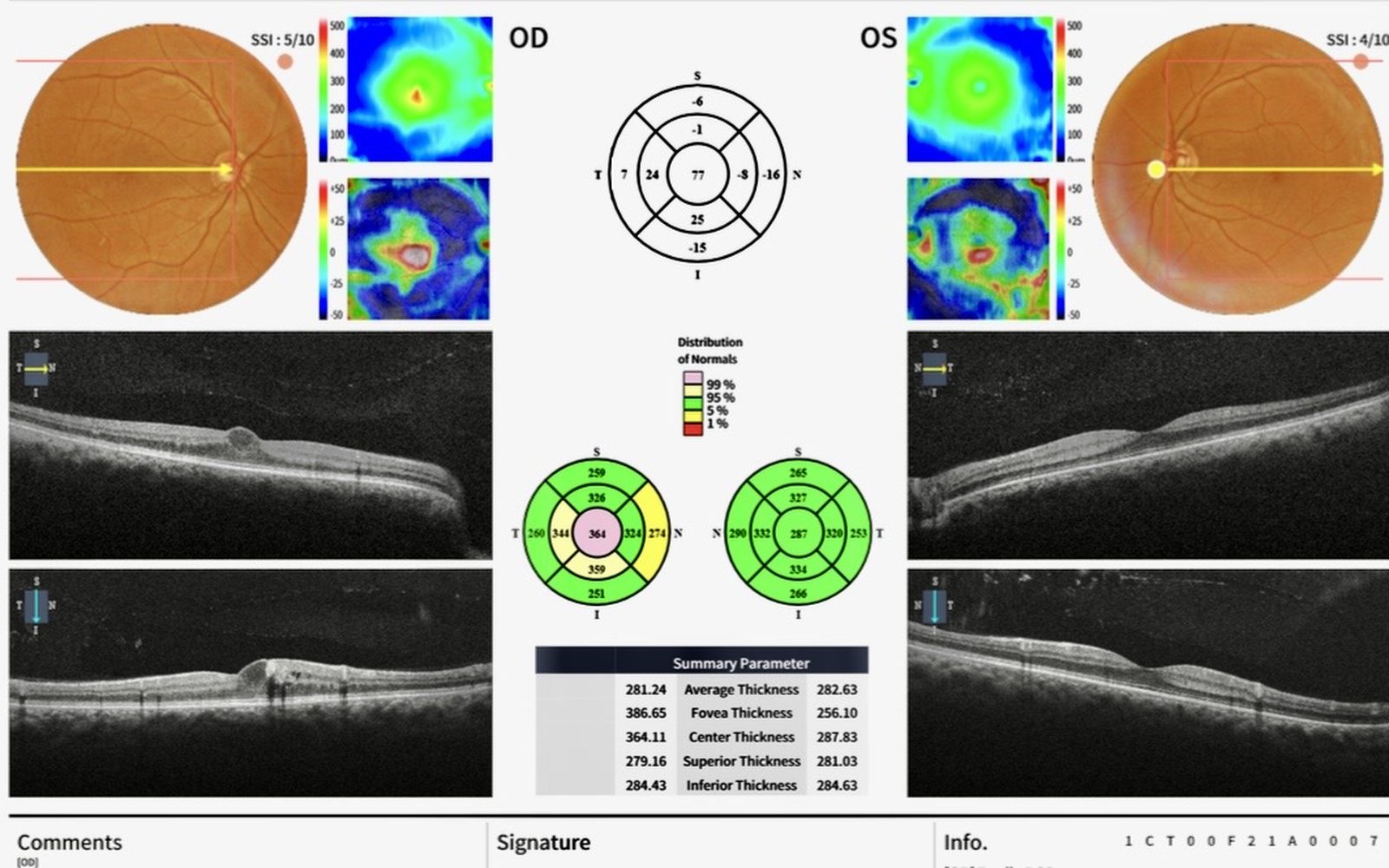
Sometimes the vitreous pulls hard enough to create a small tear in the retina. If fluid then passes through that tear and gets underneath the retina, the retina can lift away from the back of the eye. This is called a retinal detachment, and it is a true ocular emergency. Without timely treatment it can cause permanent vision loss.
This is also why I always look closely at the retina during a comprehensive eye exam, even for patients who say their vision feels perfectly fine. Many early retinal problems show no symptoms at all in the centre of vision.
Warning Signs You Should Never Ignore
Contact an eye care professional the same day if you notice:
- A sudden shower of new floaters
- New flashes of light, even if brief
- A dark curtain or shadow moving across your field of vision
- A missing area in your side or central vision
- A sudden drop in clarity or a noticeable blur
These symptoms should never be brushed off, even if they seem to settle on their own. A retinal tear can be silent between episodes.
Who Is at Higher Risk?
Anyone can develop a retinal tear, but the risk goes up if you are:
- Over the age of 50
- Highly nearsighted
- Living with diabetes
- Have a family history of retinal detachment
- Have had previous eye surgery or a significant eye injury
Patients with diabetes face an additional layer of risk because the small blood vessels at the back of the eye can leak or bleed. I've covered this in more depth in Diabetes and Your Vision: The Importance of Retinal Screenings, which I often recommend to patients managing type 1 or type 2 diabetes.
For patients over 65, regular eye exams become even more important. OHIP coverage and what an annual exam includes for seniors is something I explain in Senior Eye Exams in Ontario: What OHIP Covers and Why They Matter, and we also offer dedicated senior eye care to monitor age-related changes year over year.
How I Evaluate Flashes and Floaters in the Office
When a patient calls describing new flashes or a sudden burst of floaters, I treat it as urgent and try to see them the same day. The exam involves dilating the pupils so I can use specialized lenses to inspect the entire retina, paying particular attention to the far peripheral retina where most tears occur.
What I'm looking for:
| Finding | What it usually means | Next step |
|---|---|---|
| Posterior vitreous detachment (PVD), no tear | Age-related vitreous shrinkage, common after 50 | Monitor; return if symptoms worsen |
| Small retinal tear, no detachment | Vitreous has pulled hard enough to tear the retina | Same-day referral for laser treatment |
| Retinal detachment | Retina is lifting away from the back of the eye | Urgent retinal surgeon referral |
| Vitreous hemorrhage | Bleeding inside the gel, often blocks the view | Urgent assessment, often imaging |
A small tear caught early can often be sealed with laser before a detachment develops. That is why timing matters so much.
Related Symptoms to Watch For
If your symptoms are more central, like distorted lines, faded colours, or a small grey patch in the middle of your vision, the conversation shifts toward the macula. I've written about that in Macular Degeneration: Why I Look at the Back of Your Eyes During Every Eye Exam, which explains why early monitoring matters so much for long-term sight.
Helpful Online Awareness Tools
Online tests can never replace a real eye examination, but they can help you notice changes between visits. Two that I often point patients toward:
- The Amsler grid test, which can reveal subtle changes in your central vision and is a useful tool for anyone monitoring retinal health.
- The contrast sensitivity test, which checks how well you distinguish subtle differences in shading, something that can quietly decline before standard vision changes.
If either test flags something unusual, please book an in-person assessment rather than waiting.
For Patients With Diabetes
Because retinal complications are more likely with diabetes, I recommend a yearly dilated exam even if vision feels normal. Our diabetic eye exam looks specifically at the small blood vessels of the retina to catch leaking, swelling, or bleeding early.
When in Doubt, Get It Checked
Most floaters are harmless. Most flashes turn out to be part of normal aging. The challenge is that a retinal tear can begin with the same symptoms, and the difference between them is only visible through a dilated retinal exam.
If you notice new flashes, a sudden increase in floaters, or any shadow or curtain moving across your vision, please don't wait. Same-day urgent appointments are available at our Aurora, Newmarket, Thornhill, Vaughan, and Richmond Hill locations. Your vision is worth a phone call.
Ready to book your eye exam?
Book an appointment with Dr. Roxanna Gangi today at the Toronto and York Region location most convenient for you.
Book an Appointment