Macular Degeneration: Why I Look at the Back of Your Eyes During Every Eye Exam
Written or medically reviewed by Dr. Roxanna Gangi, Optometrist
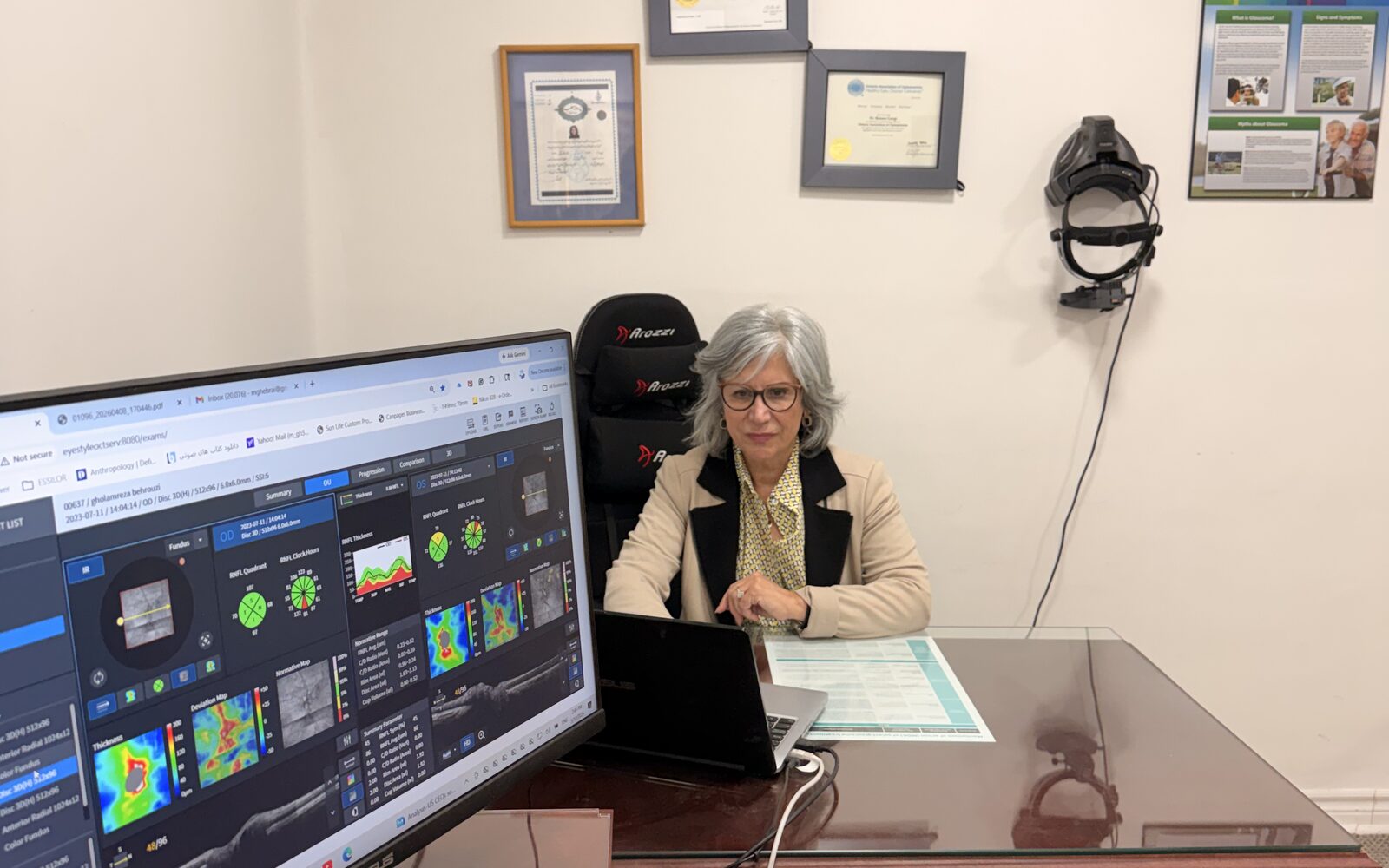
One of the questions I hear most often from patients is:
“My vision seems fine. Do I really need retinal imaging or dilation?”
It’s a fair question.
After all, if you’re seeing clearly, it’s easy to assume everything inside your eyes is healthy.
But as Dr. Roxanna Gangi, one of the most important things I do during a comprehensive eye exam is look for signs of eye diseases that often develop silently long before you notice any symptoms. One of the most common examples is macular degeneration.
Many people are surprised to learn that vision can feel completely normal while early changes are already taking place inside the eye. That’s why regular eye examinations are about much more than updating a glasses prescription—they’re an important part of protecting your long-term eye health.
What Is Macular Degeneration?
Macular degeneration, often called age-related macular degeneration (AMD), affects the macula—the small central part of the retina responsible for your sharpest vision.
The macula helps you perform the visual tasks you rely on every day, including:
- Reading
- Driving
- Recognizing faces
- Watching television
- Using a computer or smartphone
- Seeing fine details
When the macula becomes damaged, central vision may gradually become blurred or distorted.
Patients often describe it this way:
“I can still see around things, but I can’t see details clearly anymore.”
That’s a classic description because macular degeneration typically affects central vision while peripheral (side) vision often remains intact.
The Two Main Types of Macular Degeneration
Dry Macular Degeneration
Dry macular degeneration is by far the most common form I see in practice.
It usually develops slowly over many years. Tiny deposits called drusen begin to accumulate beneath the retina, and the macula gradually becomes less efficient at functioning properly.
In the early stages, most people notice nothing at all.
As the condition progresses, symptoms may include:
- Blurry central vision
- Difficulty reading small print
- Needing brighter light to see comfortably
- Trouble recognizing faces
- Reduced sharpness when looking straight ahead
Wet Macular Degeneration
Wet macular degeneration is less common, but it can be more aggressive.
This occurs when abnormal blood vessels grow beneath the retina and leak blood or fluid.
Unlike the dry form, vision changes can happen relatively quickly.
Common symptoms include:
- Straight lines appearing wavy
- Distorted vision
- Dark or missing areas in central vision
- Sudden reduction in visual clarity
Any sudden change in vision should be assessed promptly by an eye care professional.
Who Is Most at Risk?
While anyone can develop macular degeneration, certain factors increase the likelihood.
Age remains the biggest risk factor, particularly after age 55.
Other risk factors include:
- Family history of macular degeneration
- Smoking
- High blood pressure
- High cholesterol
- Cardiovascular disease
- Poor diet
- Long-term UV exposure
This is one reason I spend time discussing your overall health during an eye examination. Your eyes don’t exist in isolation—many systemic health conditions can influence what happens inside them. If you’d like to read more about that, I’ve written about why eye doctors ask so many questions about your health during an eye exam.
Why Early Detection Matters
One of the most challenging aspects of macular degeneration is that it often develops without obvious warning signs.
You can have early retinal changes and still pass your driver’s vision test, read comfortably, and feel that your eyesight is perfectly normal.
That’s why I frequently identify early signs during routine examinations before patients have noticed any vision changes themselves.
When we detect these changes early, we can:
- Establish a baseline for future comparison
- Monitor progression closely
- Recommend lifestyle modifications
- Refer for treatment when appropriate
- Help preserve vision for as long as possible
The earlier a problem is identified, the more options we usually have.
How We Detect Macular Degeneration
During a comprehensive eye examination, I evaluate not only how well you see but also the health of the structures inside your eyes.
One of the most valuable tools we use is digital retinal imaging.
These high-resolution images allow us to document the retina and macula in remarkable detail and compare changes over time. Often, subtle retinal changes can be detected years before symptoms appear. This is one of the reasons retinal screenings are such an important part of senior eye care, and why I take a similar approach in retinal screenings for patients with diabetes.
For older adults, regular eye examinations become even more important because age-related eye conditions become increasingly common. You can also read more about senior eye exams in Ontario and what OHIP covers.
Many patients are surprised when they discover that a routine eye exam can identify concerns long before they affect everyday vision.
Can You Prevent Macular Degeneration?
There is currently no guaranteed way to prevent macular degeneration entirely.
However, several lifestyle habits may help reduce risk and support long-term eye health.
I typically recommend:
- Avoiding smoking
- Eating plenty of leafy green vegetables
- Maintaining healthy blood pressure
- Controlling cholesterol levels
- Staying physically active
- Wearing quality UV-protective sunglasses
- Keeping up with regular eye examinations
Small choices made consistently over many years can have a meaningful impact on overall eye health.
A Conversation I Have Every Day
When I recommend retinal imaging, dilation, or routine follow-up examinations, it’s rarely because I’m concerned about a change in your glasses prescription.
More often, I’m looking for conditions that can quietly affect vision over time—conditions such as macular degeneration, glaucoma, diabetic eye disease, and retinal abnormalities.
Many of these problems are far easier to manage when detected early.
That’s one of the reasons I encourage patients not to wait until they notice symptoms before scheduling an eye exam.
Protecting Your Vision Starts with Regular Eye Exams
My team and I focus on helping patients protect their vision at every stage of life.
Whether you’re coming in for your annual eye exam, retinal imaging, or a senior eye health assessment, our goal is always the same: detect problems early, answer your questions, and help you maintain healthy vision for years to come.
If it has been more than a year since your last eye examination—or if you’ve noticed any change in your vision—I encourage you to book an appointment at one of our clinics across Toronto and York Region.
Your eyesight is one of your most valuable assets, and protecting it starts with knowing what’s happening beneath the surface.
Dr. Roxanna Gangi
Optometrist
Ready to book your eye exam?
Book an appointment with Dr. Roxanna Gangi today at the Toronto and York Region location most convenient for you.
Book an Appointment