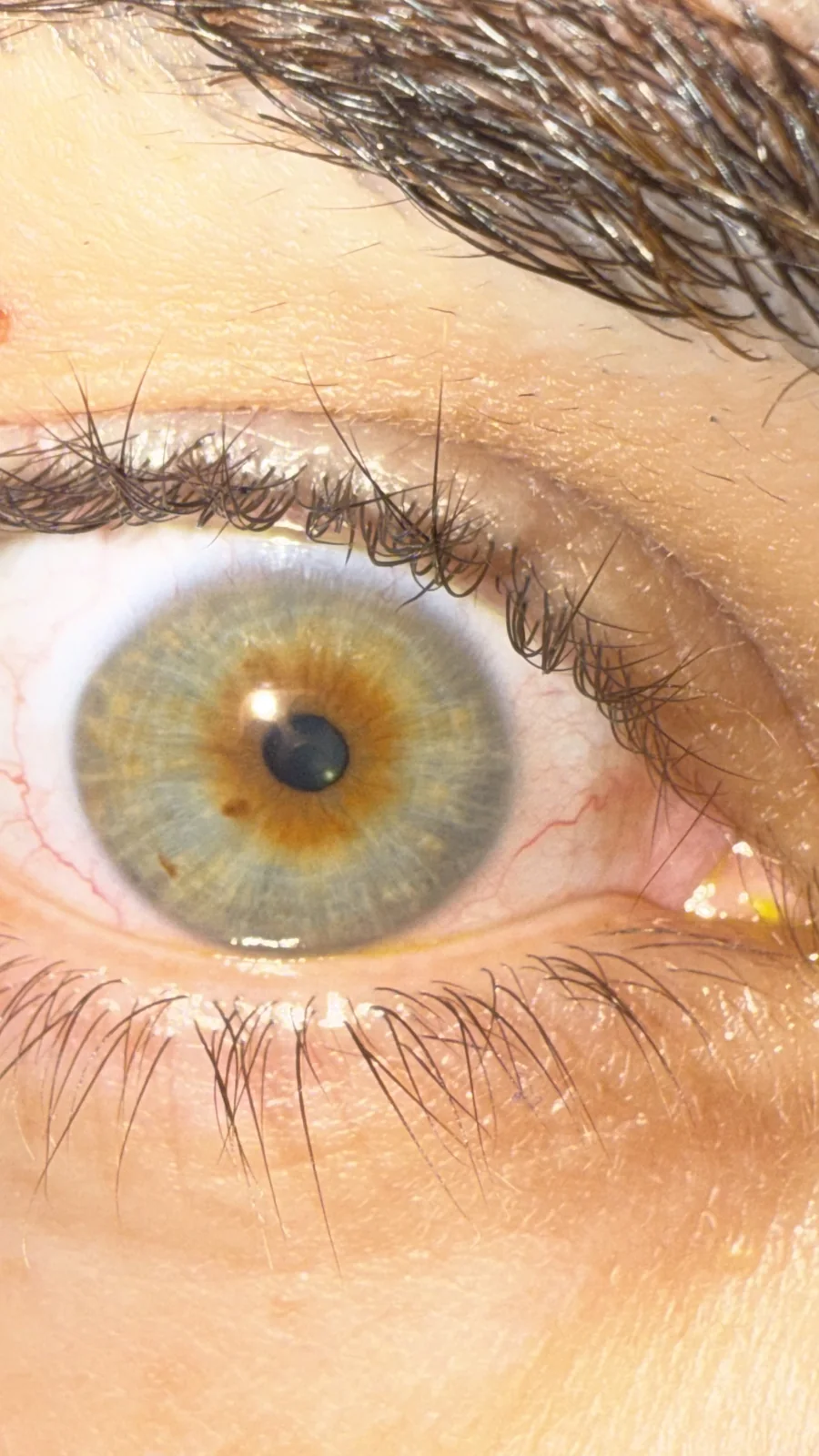
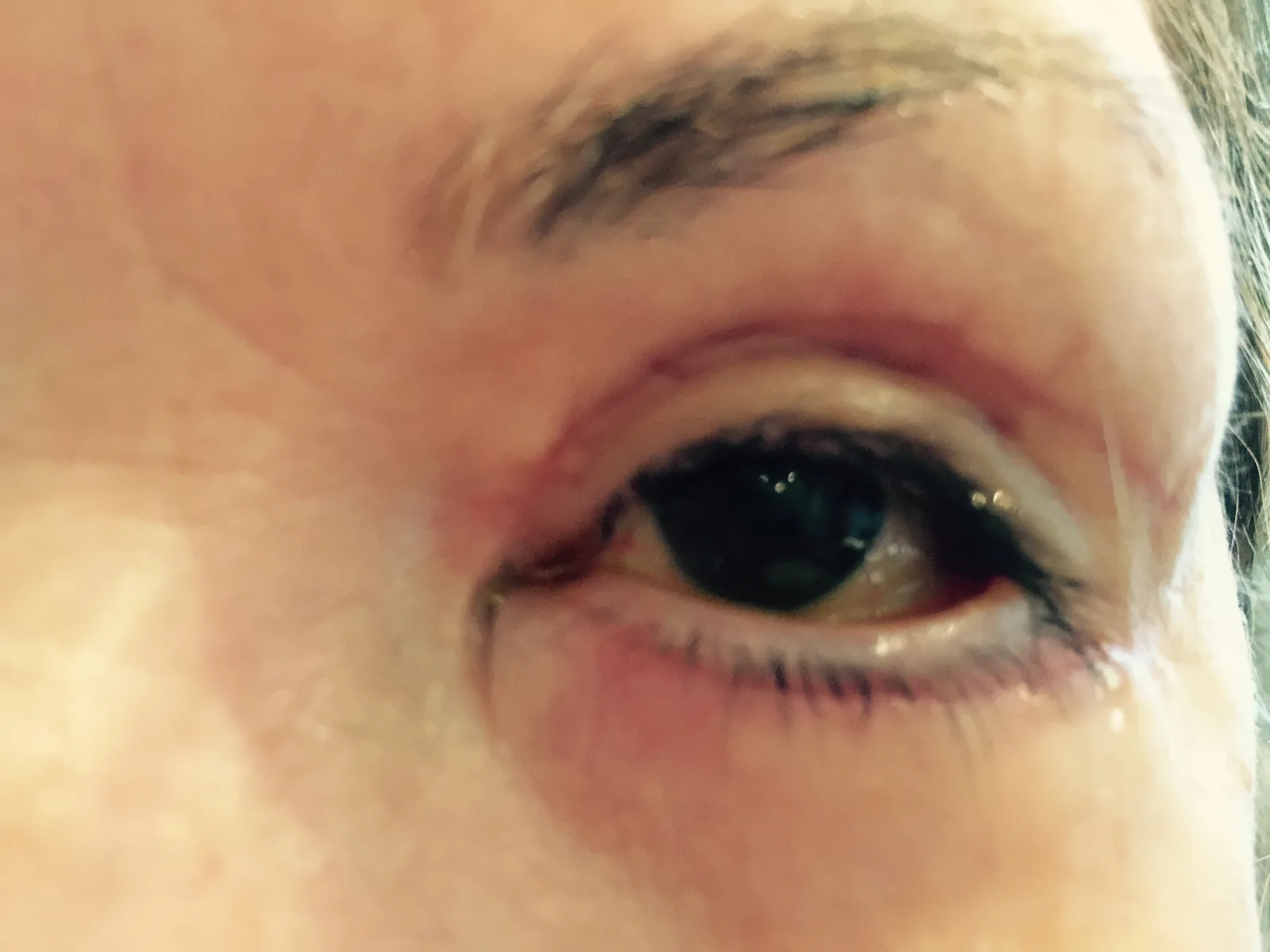
Got Something Stuck in Your Eye? Here's Why It's Usually Not a Good Idea to "Wait Until Tomorrow"
Written or medically reviewed by Dr. Roxanna Gangi, Optometrist
It happens faster than most people realize.
You're cutting a piece of wood.
Changing brakes on your car.
Working in the garage.
Mowing the lawn.
A gust of wind hits your face.
A few seconds later your eye starts watering and you have that unmistakable feeling that something is in there.
Most of the time people do exactly the same thing.
They blink.
Rinse the eye.
Blink some more.
Then spend the next six hours hoping it will magically disappear.
Sometimes it does.
Sometimes it doesn't.
And that's where problems start.
"It Feels Like Sand in My Eye"
One of the most common things patients tell Dr. Roxanna Gangi is:
"It feels like there's sand in my eye."
The interesting thing is that the feeling itself doesn't tell us very much.
It might actually be a grain of dust.
It might be a small scratch.
Or it might be a tiny piece of metal, wood, stone, or plastic embedded in the cornea.
The cornea is the clear front surface of the eye. Think of it as the windshield of your visual system.
When it's smooth and clear, vision is sharp.
When something damages it, even something microscopic, your eye notices immediately.
That's why a tiny speck can feel far worse than people expect.
Why Metal Is Different
Not all foreign bodies behave the same way.
An eyelash is annoying.
A grain of dust is annoying.
A piece of metal is a different story.
Once metal sits in the eye, it can begin to oxidize and create what eye care professionals call a rust ring.
Many patients are surprised to hear this because they assume the object is simply "stuck."
In reality, the eye is reacting to it almost immediately.
The longer it remains there, the more difficult removal can become and the greater the chance of inflammation, infection, or scarring.
That is why eye injuries involving grinding, drilling, welding, construction work, or automotive repairs should be assessed sooner rather than later.
The Mistake We See All the Time
People often assume that if they can still see well, the eye must be okay.
Unfortunately, vision is not always a good indicator.
We've seen patients with excellent vision who still had metal embedded in the cornea.
We've also seen patients who thought they simply had a scratch, only to discover the foreign body was still there two days later.
If the eye keeps watering, remains red, becomes sensitive to light, or continues to feel scratchy every time you blink, there's a reasonable chance something is still present. A quick way to check how your vision is performing in the meantime is to try one of our online vision tests, though they are never a substitute for an in-person assessment.
What Happens During Removal?
Most patients are nervous about this part.
They imagine needles.
Pain.
Someone poking at their eye.
The reality is usually much less dramatic.
After numbing drops are placed in the eye, most people immediately feel relief because the scratching sensation disappears.
Using a microscope called a slit lamp, Dr. Roxanna Gangi can examine the front of the eye in remarkable detail and determine exactly what is causing the problem.
In many cases, the foreign body can be removed quickly during the visit.
Patients are often surprised that the anticipation was worse than the procedure itself.
One of the Fastest Healing Parts of the Human Body
The cornea has a remarkable ability to heal.
That's the good news.
Once the foreign body is removed and the eye is properly treated, many people feel significantly better by the next day.
In uncomplicated cases, healing often occurs within 24 to 48 hours.
Of course, every injury is different, which is why follow up care can sometimes be important.
Sometimes an Eye Injury Reveals Something Else
Interestingly, some patients who come in because of a foreign body haven't had an eye examination in years.
The emergency gets their attention, but the visit often becomes an opportunity to look at the bigger picture.
A Comprehensive Eye Exam can identify prescription changes, dry eye disease, early cataracts, glaucoma risk factors, and other conditions before they begin affecting daily life. If you haven't been in for a while, How to Prepare for Your Eye Exam walks through what to expect.
In fact, many people discover they have underlying dryness that was making the irritation feel even worse. A focused Dry Eye Assessment can pinpoint whether tear film problems are contributing to the discomfort. If that sounds familiar, you may also want to read Can Stress Actually Cause Dry Eyes?, which explores some of the less obvious causes of eye irritation. And for a broader look at how much the eye can reveal about overall health, how the retina may reveal early signs of Alzheimer's disease is a fascinating read.
The Best Treatment Is Boring
Eye protection.
That's it.
The vast majority of foreign bodies we remove could have been prevented with proper safety glasses.
Nobody enjoys wearing them.
Nobody thinks the accident will happen to them.
Yet many eye injuries occur during jobs that take less than five minutes.
One small piece of metal can create days of discomfort and potentially leave a permanent scar.
Safety glasses may not look exciting, but they are considerably more comfortable than having metal removed from your eye.
Don't Play the Waiting Game
If it feels like something is stuck in your eye and the sensation is not improving, there is usually very little benefit in waiting another day.
The earlier the problem is assessed, the easier treatment often becomes.
If you are experiencing redness, tearing, light sensitivity, blurred vision, or a persistent foreign body sensation, schedule an appointment with Dr. Roxanna Gangi as soon as possible.
You can also learn more about Dr. Roxanna Gangi's training and background on the About Dr. Roxanna Gangi page.
Because when it comes to something stuck in your eye, "I'll wait and see tomorrow" is often the least useful treatment plan.
Think Something Is Stuck in Your Eye?
If your eye remains red, irritated, watery, sensitive to light, or feels like something is still present, book an appointment with Dr. Roxanna Gangi as soon as possible.
Book Appointment