School Vision Screening vs Children's Eye Exams: Why Passing Isn't Always Enough
Written or medically reviewed by Dr. Roxanna Gangi, Optometrist
“But the School Said His Eyes Were Fine”
A mother sat in Dr. Roxanna Gangi’s exam chair recently and said something that comes up surprisingly often.
“I don’t understand. The school checked his eyes a few months ago and everything was normal.”
A few seconds later she added:
“But he still hates reading.”
That’s usually when the conversation starts.
Because many parents assume a passed school vision screening means there can’t be a vision problem.
Unfortunately, that’s not always true.
In fact, some of the children who benefit most from a comprehensive eye exam are children who passed the school screening.
At first glance that doesn’t make much sense.
If they passed, doesn’t that mean their vision is good?
Not necessarily.
A school screening is designed to answer one question:
“Can this child see well enough to identify letters on a chart?”
A comprehensive children’s eye exam asks many more questions.
Can the eyes focus comfortably?
Do both eyes work together properly?
Can the child track words smoothly across a page?
Is there an early prescription change developing?
Is nearsightedness progressing?
Is the visual system making reading harder than it should be?
Those questions matter because school is no longer just about seeing the board at the front of the classroom.
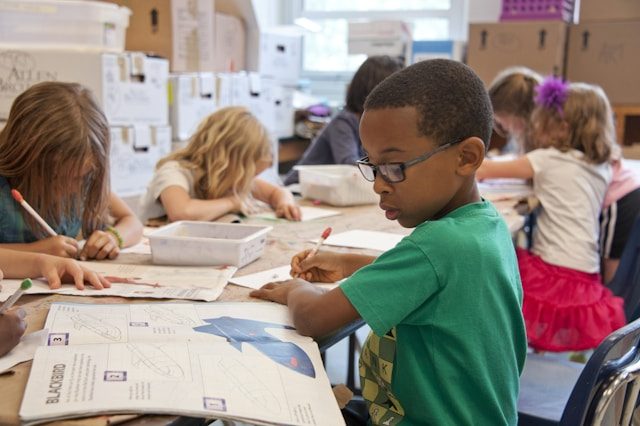
Today’s children spend hours every day reading, writing, using tablets, working on laptops, and switching constantly between near and far tasks.
Some children handle that effortlessly.
Others work much harder than they should without realizing it.
One child may finish a page and remember everything they read.
Another child may finish the same page and feel exhausted. As we explained in Why Regular Eye Exams for Children Matter, small visual issues can quietly add up over the course of a school day.
From the outside they look identical.
Inside, their visual systems may be doing completely different amounts of work.
That’s one reason Dr. Roxanna Gangi often tells parents that vision is about much more than seeing clearly.
Twenty twenty vision is only one piece of the puzzle.
A child can read the smallest line on an eye chart and still struggle with reading comfort, eye coordination, focusing, or visual endurance.
And children rarely tell us this.
Most have no idea anything is wrong.
They assume everyone sees exactly the way they do.
That’s why parents often notice subtle clues first.
Frequent eye rubbing.
Headaches after school.
Avoiding books.
Losing their place while reading.
Holding screens unusually close.
Complaints that reading feels tiring.
None of these automatically mean there’s a vision problem.
But they are often good reasons to schedule a Children’s Eye Exam. In the meantime, our online vision tests can be a useful way for parents to explore a few aspects of how their child sees, though they are never a substitute for an in-person examination.
One of the biggest concerns Dr. Roxanna Gangi sees today is the increasing number of children developing myopia, or nearsightedness.
Many researchers believe increased screen use and reduced outdoor time are contributing factors.
The earlier myopia is identified, the more opportunities there may be to slow its progression. That’s why regular examinations and Myopia Management Assessments have become increasingly important for school aged children. For a closer look at why this matters, see The Rise of Myopia in Children: What Parents Need to Know.
School screenings remain valuable.
They catch many children who genuinely need help.
But they were never designed to replace a comprehensive eye examination.
Think of a screening as a smoke detector.
It can alert you when there’s a problem.
A comprehensive eye exam is the full inspection that helps determine what’s actually happening.
If your child passed a school screening but still struggles with reading, concentration, headaches, or visual comfort, it may be worth taking a closer look.
Sometimes the problem isn’t motivation.
Sometimes it isn’t attention.
Sometimes it’s vision.
To learn more about children’s eye care, visit our Children’s Eye Exams page or Book a Children’s Eye Exam Appointment.
Could Your Child Be Working Harder Than They Need To?
If your child struggles with reading, complains of headaches, loses their place while reading, or simply hasn't had a recent eye examination, schedule a Children's Eye Exam with Dr. Roxanna Gangi.
Book Children's Eye Exam