When Do Babies Start Seeing Their Parents? Vision Development in the First Year
Written or medically reviewed by Dr. Roxanna Gangi, Optometrist
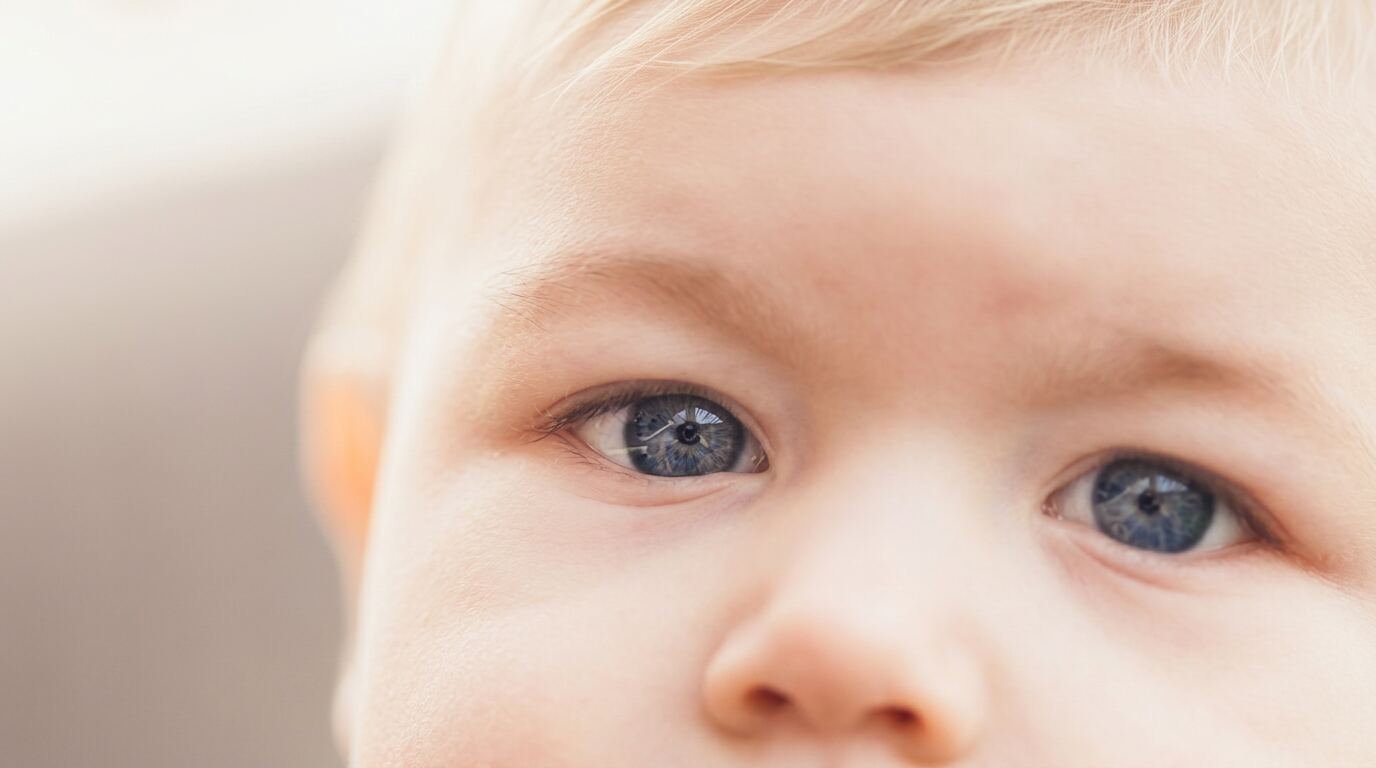
One of the questions I hear most often from new parents is surprisingly simple:
"Can my baby actually see me?"
As an optometrist who has spent years working with young families across York Region, I understand why parents ask. During those first few weeks, babies spend so much time looking around, sleeping, and reacting to sounds that it can be difficult to know exactly how much of the world they are actually seeing.
The answer is both fascinating and reassuring.
Babies are not born seeing the world the way adults do. In fact, vision is one of the last senses to fully mature. During the first year of life, a child's visual system develops at an incredible pace, gradually learning to focus, recognize faces, distinguish colours, judge distance, and build visual memories.
Understanding these milestones can help parents appreciate what is normal, what may require attention, and why regular monitoring of visual development is so important.
The First Few Weeks: Built for Bonding
A newborn's vision is surprisingly limited.
Most babies can focus best at a distance of approximately 20 to 30 centimetres, which happens to be about the distance between a baby's face and the face of a parent during feeding or cuddling.
Nature seems to have planned this perfectly.
Although everything appears blurry compared to adult vision, babies are naturally attracted to faces, especially eyes. They also respond strongly to high-contrast patterns and bright light.
At this stage, your baby is not studying the details of a room or admiring colourful toys. Their visual world is centred primarily on the people caring for them.
Around One Month: The First Signs of Recognition
By four to six weeks of age, many parents notice that their baby appears more engaged.
Eye contact becomes a little longer. A familiar face may hold their attention for a few extra seconds. Some babies even seem to follow a parent as they move nearby.
Vision is still developing, but the brain is beginning to connect what the eyes see with memory and familiarity.
This is often when parents start feeling that their baby is truly looking back at them.
When Does a Baby Recognize Mom and Dad?
Long before children can speak, they begin learning who the important people in their lives are.
Recognition develops through a combination of sight, voice, scent, touch, and repeated interaction. During the first few months, babies become increasingly familiar with the faces they see every day.
By approximately two to three months of age, many babies clearly respond differently to familiar faces than they do to strangers.
They are no longer simply seeing their parents.
They are beginning to know them.
The Three-Month Leap
Around three months, visual development often takes a noticeable step forward.
Babies become much better at maintaining eye contact, following moving objects, and studying facial expressions. Parents frequently notice that smiles become more interactive and intentional.
This growing visual awareness plays an important role in social development. Babies learn by watching faces, observing expressions, and responding to visual cues from the people around them.
When Do Babies Start Seeing Colours?
One of the most common myths is that babies see only in black and white.
In reality, newborns can detect some colour, but colour vision is still immature.
Over the first few months, colour perception develops rapidly. Reds, greens, blues, and other colours become easier to distinguish, and by about six months of age many babies see colours much more similarly to adults.
As children continue to grow, colour vision becomes an important part of learning and development. This is one reason why I encourage parents to understand conditions such as colour vision deficiency, which often goes unnoticed until later childhood.
Learning to Explore the World
As babies begin reaching, crawling, and eventually walking, vision becomes increasingly connected to movement.
They learn how far away objects are. They begin judging depth and distance. Their eyes learn to work together more efficiently.
This stage is particularly important because many visual skills that support reading, learning, sports, and coordination later in life are built upon these early developmental foundations.
Do Boys and Girls Develop Vision Differently?
Parents occasionally ask whether girls develop vision faster than boys.
From a clinical perspective, there is no meaningful difference in the normal visual milestones we expect during infancy. Individual children develop at different rates, but the overall pattern of visual development is remarkably similar between boys and girls.
The focus should always be on the individual child rather than comparisons with other children.
Why Early Eye Care Matters
The first year of life is only the beginning of a child's visual journey.
As children enter preschool and school years, their eyes continue developing. Conditions such as nearsightedness are becoming increasingly common, particularly as children spend more time indoors and on digital devices.
Parents are often surprised to learn that many childhood vision problems can exist even when a child has never complained about their eyesight. This is one of the main reasons regular eye exams for children matter, even when nothing appears to be wrong.
That is why routine children's eye examinations remain an important part of preventive health care.
A Remarkable First Year
One of the most remarkable things about infant vision is how quickly it changes.
A newborn begins life seeing a blurry world of shapes, light, and nearby faces. Within months, that same child is recognizing family members, responding to smiles, reaching for toys, exploring colours, and building visual memories that will shape how they interact with the world for years to come.
And perhaps the most beautiful milestone of all is that one of the very first things most babies learn to recognize is not a toy, a colour, or a favourite object.
It's the faces of the people who have been looking lovingly back at them from the very beginning.
About Dr. Roxanna Gangi
Dr. Roxanna Gangi provides comprehensive eye care for children and adults throughout York Region. Parents interested in learning more about visual development can explore the website, or find the nearest of our York Region locations for their family.
Ready to book your eye exam?
Book an appointment with Dr. Roxanna Gangi today at the Toronto and York Region location most convenient for you.
Book an Appointment